
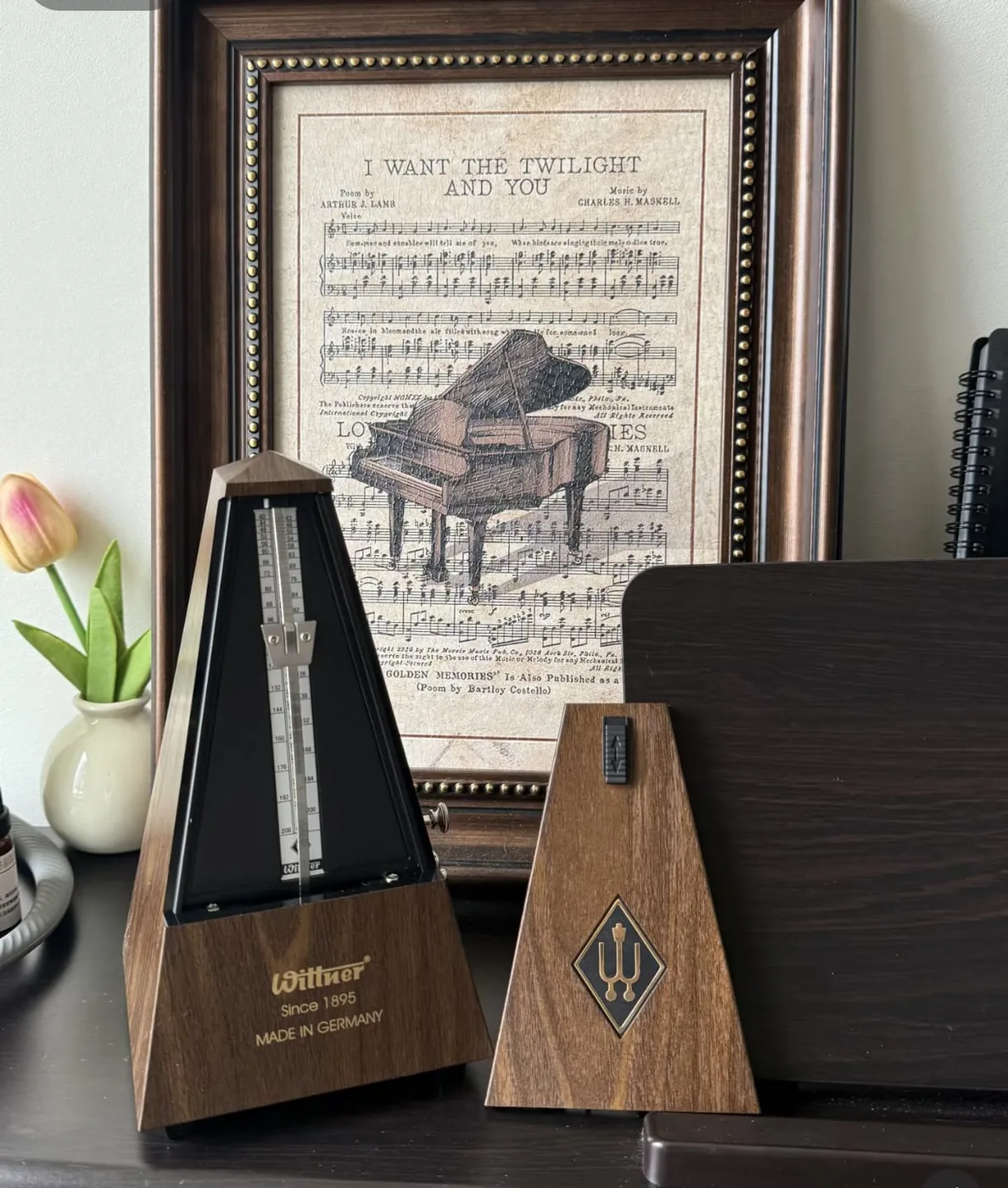
Every time I do a music assessment and meet students of different levels, I notice a very common problem: many children rarely, if ever, practise with a metronome. Long-term lack of metronome training directly weakens tempo control — playing louder passages unconsciously faster, softer passages slower, so the whole piece speeds up and slows down, its rhythm uneven.
Why Steady Rhythm Matters So Much
Beginner pieces are simpler, so the problem may not stand out. But as pieces grow harder, with technical pressure plus a weak rhythmic base, keeping an even tempo becomes very hard. At higher levels one also meets rubato — which isn't playing freely or speeding up and slowing at whim, but an artistic treatment built on a steady rhythmic base. If a steady tempo was never trained early, rubato just becomes irregular rushing and dragging.
A metronome doesn't kill musicality. It's a tool to train inner rhythm — not to mechanically play a whole piece to the ticks, but to help the brain build a steady sense of time.
Five Practical Metronome Methods
• Start slow, don't rush: pick a slow tempo you can play with no mistakes, follow each tick, give every note its full value with steady fingers, then nudge the speed up. Never start at the target tempo.
• Practise in sections, don't charge through: break the piece into short phrases; pull out the hard, rhythmically complex spots to drill with the metronome, then combine once each is solid.
• Layer it: count first, then play: before playing, count the beats aloud with the metronome to read the rhythm and note lengths clearly, then play — so you don't discover rhythmic chaos mid-way.
• Once solid, wean off gradually: when a phrase can hold an even tempo for a while, turn the metronome off and play by inner rhythm, then turn it back on to check for unconscious speeding or dragging.
• Watch the dynamic traps: loud, climactic spots tempt you to rush; soft, lyrical passages tempt you to drag. Target these deliberately, using the metronome to train independence from volume.
Going Further: Shaping Dynamics While Holding a Steady Tempo
Many students are steady until they add dynamic contrast, then the tempo runs away. To shape beautiful dynamics while keeping the rhythm steady: with the metronome on, repeat one phrase — first soft, then loud, then with crescendo and diminuendo — keeping the metronome speed unchanged, staying with the ticks whether loud or soft. The point: what changes is volume and tone, not speed. (See Always Getting Stuck Playing Hands Together?)
In Closing
Steady rhythm is the foundation of all musical expression. Skipping the metronome early lets rhythm problems pile up — hidden at beginner level, they surface with harder pieces and advanced demands. Master “holding a steady tempo” first, and only then can you use rubato beautifully. A metronome isn't a machine that binds music, but a way to build your own inner clock. To adjust your child's practice around rhythm, you are welcome to book a one-to-one piano consultation.
Further Reading
Sight-Reading Isn't Last-Minute Cramming: Building Long-Term Independence Through Regular Training
How to Practise the Piano Effectively: Practising Right Matters More Than Practising Long
Always Getting Stuck Playing Hands Together? A Practice Direction for Coordination
Frequently Asked Questions
Does using a metronome kill musicality?
No. It's a tool to train inner rhythm — not to mechanically play to the ticks, but to help the brain build a steady sense of time. Mastering a steady tempo is what later lets you use rubato beautifully.
How should I start practising with a metronome?
Start at a slow tempo you can play flawlessly, follow each tick to give notes their full value, then nudge faster; and practise in sections rather than charging through the whole piece at target speed.
Why do I speed up at the loud parts?
It's a common rhythmic trap: loud and climactic spots invite rushing, soft lyrical passages invite dragging. Target these deliberately, using the metronome to stay independent of volume.
Do I have to keep the metronome on the whole time?
No. It's a training tool. Once a phrase can hold an even tempo for a while, turn it off and play by inner rhythm, then turn it back on to check.
Ms. Kannaz Kwok
30+ years of piano teaching experience. Holder of internationally recognised qualifications from the Royal Academy of Music and Trinity Laban Conservatoire.