
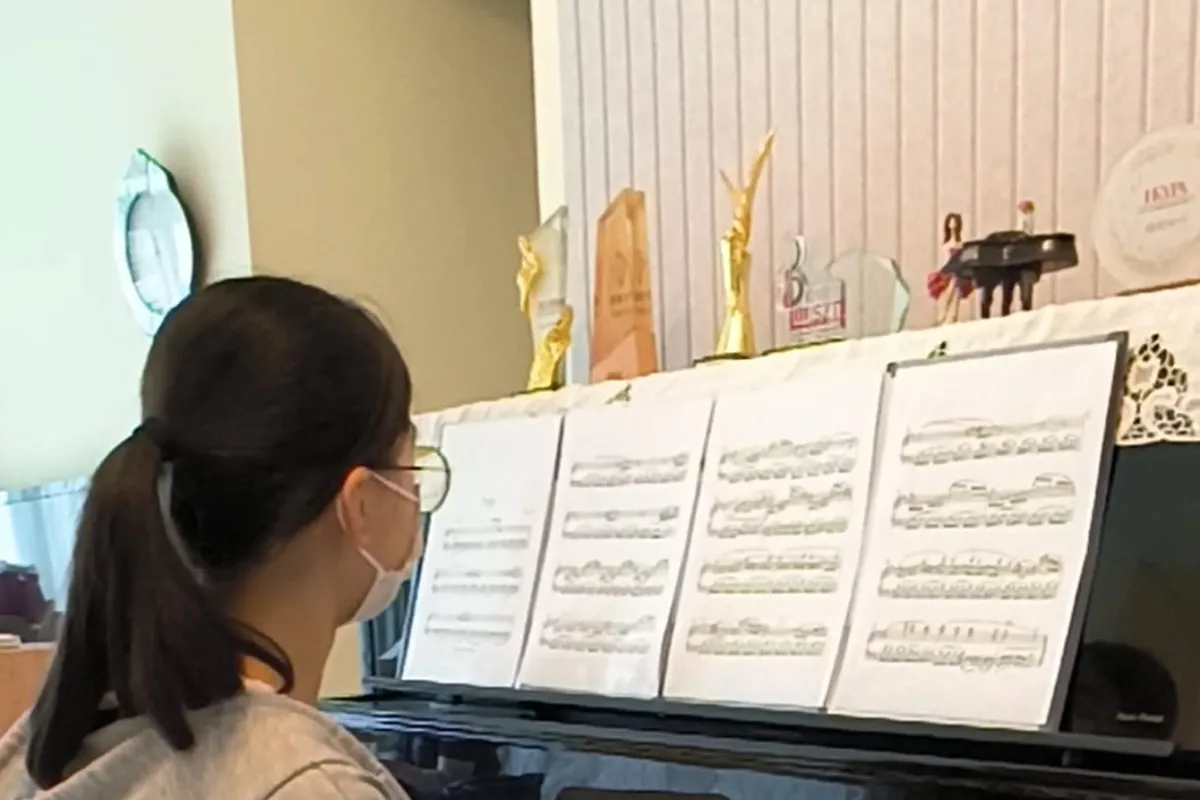
“My child practises every day, so why does progress feel so slow?” This is a shared question among many parents and students. The amount of time spent matters, but what matters more is the way the practice is done. The same passage, practised with different methods, can yield very different results over time. Many students understand practice as “playing from start to finish, many times over,” yet rarely pause to ask: in this session, what problem am I actually trying to solve? This article looks at practice from the angle of method, unpacking a few core principles of effective practice — slow practice, small sections, hands-separate and backward chaining — to help students and parents rethink one idea: practising right often matters more than practising long.
Slow Practice: The First Step to Seeing the Problem Clearly
Slow practice is one of the most underrated yet most effective methods. It is not simply “playing slowly,” but deliberately reducing speed so the brain and fingers have enough time to process the fingering, dynamics, wrist motion and sound of each note. When the tempo slows down, the wrong notes, tense hand shapes or uneven rhythm that were previously glossed over all become clearly visible, giving the student a chance to address them one by one.
It helps to first secure a passage at a speed you can fully control, then gradually build up; every increase in tempo should be on the condition that the playing stays clean and relaxed. If mistakes appear the moment you speed up, it often means the foundation is not yet solid — and returning to a slower tempo to rebuild it is, in fact, the most efficient thing to do.
Small Sections and Hands-Separate Practice: Isolating the Difficulty
Repeatedly playing a whole piece from end to end is often inefficient — the genuinely difficult passages are only a small part, yet they get dragged through alongside the easy ones. A more effective approach is to divide the piece into small sections (for example two to four bars), focus on the parts that are truly hard, secure them, and then reconnect them with the surrounding material.
Before you start, it also pays to scan the whole piece and mark the passages with similar melody, rhythm or accompaniment patterns. Many pieces reuse the same figuration or phrase modules, so once you have mastered one, the similar passages come together with only minor adjustment — no need to start each from scratch, which meaningfully shortens overall practice time.
Hands-separate practice is equally important: the left and right hands each carry different voices, rhythms and motions. Securing each hand on its own before putting them together makes the coordination clearer and makes it easier to see which hand a problem comes from. Once each hand is secure, you can also use your phone to record one hand and play the other along to the recording; this trains not only the hands' coordination but also the ear's sense of the two voices, so playing hands-together comes more naturally.
Backward Chaining and “Purposeful Repetition”
Backward chaining is an often-overlooked technique: start from the last small segment of a phrase, secure it, then add a segment before it, gradually stringing the whole phrase together “from back to front.” The benefit is that the parts closer to the end are usually the least secure; backward chaining gives those passages more reinforcement, rather than leaving the opening the most familiar and the ending the shakiest every time.
More important than the method itself is that every repetition should have a clear goal: this time, am I watching fingering? Dynamic shading? The breathing and shaping of the phrase? Repeating aimlessly, over and over, tends to “learn in” the mistakes along with everything else. When each repetition carries a clear purpose, the quality of practice naturally rises.
One Hard Spot, Broken Down Several Ways
When a technical difficulty stays stuck no matter how many times you repeat it, avoid grinding away with the same approach — that tends to lock in the tension and the mistake together. It is far more effective to tackle the same spot with several different methods, breaking through from different angles:
• Rhythm variation: practise the notes as long-short or dotted rhythms to firm up finger spacing and timing.
• Legato–staccato switch: first play each finger movement clearly in staccato, then return to the legato of the score.
• Separating the voices: bring out the melody notes alone and play the accompaniment lightly, to resolve fingers “fighting” over strength.
• Adding notes gradually: start from two or three notes and build back up to the full phrase, lowering the difficulty of getting it under the fingers.
Working on one obstacle from several angles usually builds a stable, correct feel faster than plain repetition.
Look at Direction, Not Just Duration
It is worth remembering that changes to practice method do not show results overnight. A new practice habit often needs to be reinforced over many days before its effect gradually shows, and the time required varies with each student’s foundation, understanding and practice conditions — there is no single timetable that fits everyone.
Parents play an important supporting role here. Rather than only noting how long a child has practised, it helps to observe whether they are focused, whether they have a clear goal, and whether they know how to break down a difficulty. If you would like a clearer picture of whether your child’s current practice is effective, a one-to-one piano consultation can help review practice habits together and find a more suitable direction.
In Closing
Effective practice is never about who sits at the piano the longest, but who practises with the clearest direction. Slow practice makes problems visible; sections and hands-separate work isolate the difficulty; backward chaining strengthens the most easily neglected parts; and purposeful repetition makes every minute count. As a student gradually builds this way of thinking, practice stops being a task to complete and becomes an ongoing process of understanding music and solving problems.
Further Reading
Why Do Children Resist Practising More as They Grow? Eight Roots of Piano Aversion
Able to Play Grade 6 Pieces Yet Wanting to Quit? Muscle Memory vs a Real Foundation
Frequently Asked Questions
Is more practice time always better?
Duration is not the only measure. Mechanical repetition may not be effective no matter how long it lasts; shorter practice with a clear goal and the right method often reinforces technique better. What matters is the quality and direction of practice, not simply the hours accumulated.
Will slow practice hold my speed back?
No. The aim of slow practice is to secure fingering, dynamics and motion; once the foundation is solid, gradually building up tempo makes it easier to reach a stable, clean speed. If mistakes appear the moment you speed up, it usually means the foundation still needs reinforcing.
Why practise hands separately?
The left and right hands carry different voices and motions. Practising them apart lets each hand build a stable feel and independence first, so coordination is clearer when they come together — and it is easier to tell which hand a problem comes from.
What if my child refuses to practise slowly?
This is very common. Set slow practice as a short task with a clear goal, and let the child hear the difference in sound that slow practice produces, gradually building a sense of achievement. A parent’s encouragement and company are an important part of sustaining motivation.
A hard spot just won't come right — what can we do?
Don't grind away with the same approach. Tackle the same spot with several methods — change the rhythm, switch between legato and staccato, separate the voices, or build back up from a few notes. Working from different angles often breaks through faster than plain repetition.
Ms. Kannaz Kwok
30+ years of piano teaching experience. Holder of internationally recognised qualifications from the Royal Academy of Music and Trinity Laban Conservatoire.