

Many hold the view that earning a performance diploma means learning music has reached its end. But for a piano teacher, a qualification is only the start of a teaching career. Students differ in character and learning style, and syllabuses and teaching ideas move with the times; only by keeping up professional development can a teacher stay current and provide fitting teaching for learners of every background. A teacher's self-improvement isn't limited to playing technique — it spans five dimensions: performing ability, teaching method, breadth of musical knowledge, child and music psychology with communication, and teaching reflection.
1. Maintain Performing Ability, Strengthen Demonstration
Performing is a piano teacher's core skill. Even if most daily time goes to teaching, one shouldn't set aside one's own playing. Keeping up practice of pieces from different periods and styles deepens interpretation, so lessons can offer accurate demonstration and explain touch, tone and phrasing.
Beyond solo practice, joining ensemble and chamber playing — working with other musicians — brings a first-hand sense of listening and coordination, which feeds back into teaching. Attending live concerts and hearing different performers' recordings also broadens one's imagination for interpretation.
2. Study Teaching Methods, Adapt to Every Student
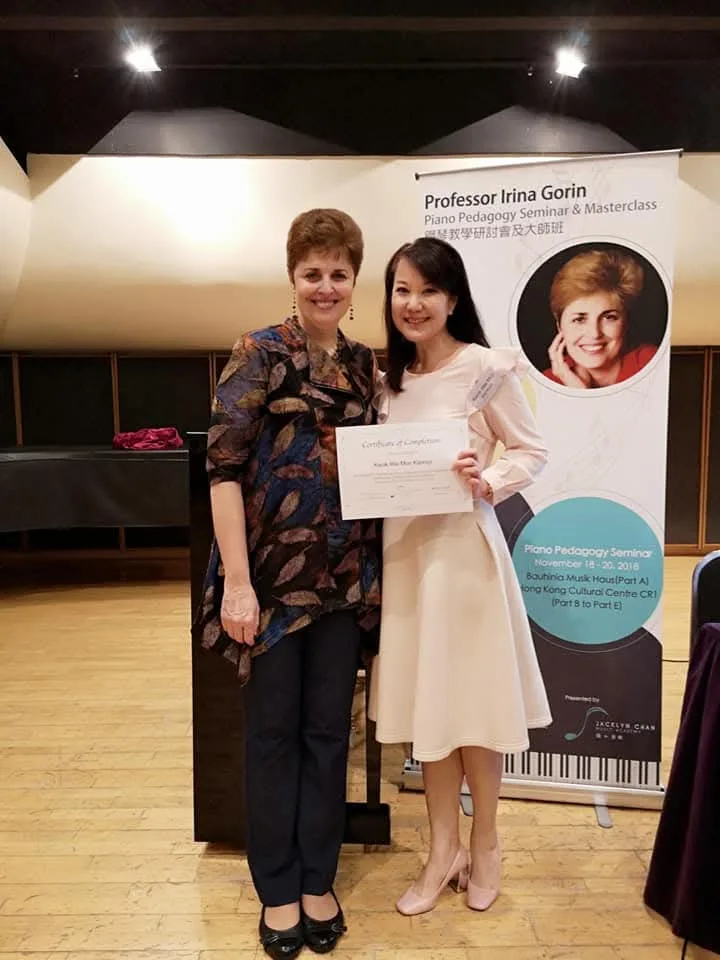
The same materials can work very differently for different children or adult learners. Keeping up with teaching methods means not clinging to a single model. Through talks and workshops, meet different teaching systems, study the strengths and weaknesses of various materials, and learn to adjust the course to a student's age, character and goals.
Facing Hong Kong students' busy schedules, a teacher also learns to design practice plans that fit real timetables; for ABRSM or ATCL candidates, to understand the syllabus and preparation strategy; for adult learners, to understand their difficulties and psychology and adjust expectations. Where possible, pursuing a teaching diploma or professional course helps systematise one's own teaching philosophy.
3. Broaden Musical Knowledge, Round Out Musicianship
Students' questions are endless, and a teacher's knowledge can't be limited to the pieces they've played. Beyond repertoire, keep revising theory, harmony and formal analysis to deepen understanding of structure; know music history across eras and composers' backgrounds, so as to lead students to read the story behind a piece.
At the same time, widen the types of music you meet — from classical to modern works, even pop and arrangements — enriching your repertoire so lessons offer more varied choices, realising a well-rounded music education.
4. Understand Child and Music Psychology, Improve Communication
Teaching is not only passing on technique; it is communication between people. Understanding child psychology matters especially: children of different ages differ in cognition, emotional response and attention span, with emotional needs particular to each stage. Young children tire of repetition and need more playful guidance; primary-age children grow self-aware and mind achievement and setbacks; in adolescence, emotions shift more markedly, with different reactions to authority and practice pressure. Understanding these traits lets a teacher accept and help students in fitting ways, rather than holding all ages to one standard.
Many obstacles students meet are not technical but psychological: exam nerves, low practice motivation, discouragement at difficulty; adult learners also carry the pressure of high self-expectation. Teachers can keep learning music psychology, understand the traits of each age group, and learn to guide students in adjusting their mindset. With parents, too, practise effective communication, setting realistic goals together and balancing grades, performance and sustained interest.
5. Teaching Reflection Is the Most Everyday Development
Development doesn't have to mean taking courses or new diplomas. The reflection after each lesson is an important part of a teacher's growth. For example: this time a student didn't grasp a concept — were the words not plain enough? How could the demonstration be improved? For a student whose progress has stalled, does the current strategy need adjusting?
Exchange among peers and sharing teaching cases can open new perspectives, drawing on others' experience and avoiding being stuck in fixed thinking. (See The Core Value of Lesson Observation in a Piano Teacher's Growth)
In Closing
Continuing development doesn't mean endlessly chasing new diplomas and certificates. Real professional growth is a willingness to keep examining one's own teaching and progress alongside students. As piano teachers, we teach students that music is lifelong learning; teachers themselves hold the same belief, so as to pass richer musical nourishment to every learner. To learn about teacher development, see our piano teacher training.
Further Reading
The Core Value of Lesson Observation in a Piano Teacher's Growth
Lesson Observation for Piano Teachers: Seeing Differentiated Teaching in Real, Age-Specific Lessons
Beyond “Passing the Exam”: Why I Care More That Students Can Truly Play
Frequently Asked Questions
After earning a performance diploma, is more development still needed?
Yes. A qualification is only the start of a teaching career; students differ, and syllabuses and ideas move with the times, so ongoing development lets a teacher serve learners of every background well.
What should a piano teacher's development cover?
Five dimensions: maintaining performing ability, studying teaching methods, broadening musical knowledge, understanding child and music psychology, and teaching reflection. Beyond technique, pedagogy and psychology matter too.
Does development require taking new diplomas?
Not necessarily. Reflection after each lesson, peer exchange and sharing teaching cases are the most everyday development. Real growth is a willingness to keep examining one's teaching.
Why should teachers understand child psychology?
Children of different ages differ in cognition, emotion and attention, and many obstacles are psychological rather than technical. Understanding child and music psychology lets a teacher accept and help students in fitting ways.
Ms. Kannaz Kwok
30+ years of piano teaching experience. Holder of internationally recognised qualifications from the Royal Academy of Music and Trinity Laban Conservatoire.