
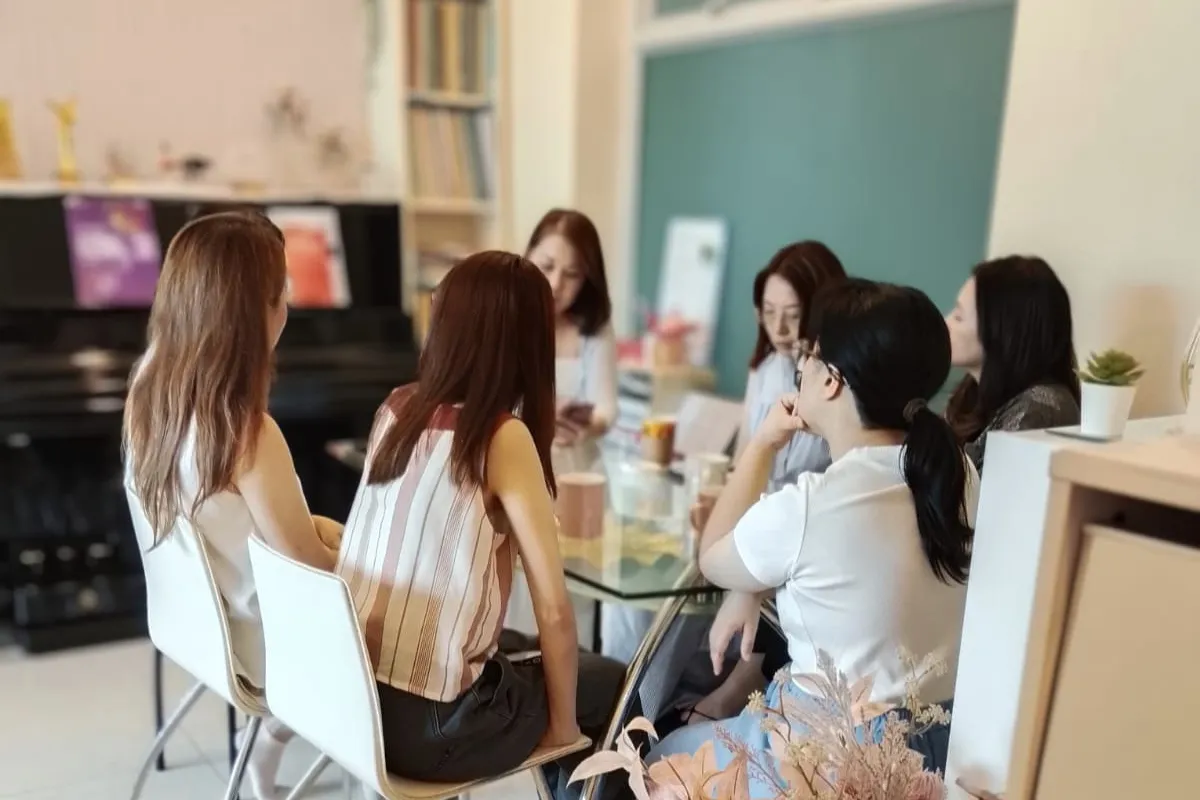
Over my many years of piano teaching, teachers of varying experience have often come to observe my lessons. These peer-exchange experiences keep prompting me to reflect: as a form of professional exchange, what essential meaning does lesson observation hold for a piano educator? Here are my personal reflections.
1. Breaking Out of Teaching Blind Spots, Broadening Thinking
Over long stretches of teaching, every teacher gradually forms their own teaching logic, habits and classroom rhythm. Staying within a single mode for too long, it's easy to overlook details that could be improved, or to fix on one angle of thinking.
By observing another teacher's lesson, a teacher can step outside their own framework and, from a third-party perspective, compare different ways of guiding, of teacher-student interaction, and of pacing — and so see possibilities they hadn't noticed in their own teaching, broadening the range of their thinking.
2. Observing How Different Students Are Handled, Refining Differentiated Teaching
Lesson observation isn't only about the surface results of a student's playing; more central is observing the complete logic of the teaching response. Take a lower-grade child's lesson: this stage is a key period for forming foundational musical habits — posture, hand shape, patience in reading, emotional regulation, and how the child responds to difficulty.
Observing helps a teacher understand how to adjust their guidance to the student's age, personality and pace, and to plan strategies suited to that development — deepening their practical understanding of teaching to each child's nature.
3. A Non-Judgemental Peer Exchange That Inspires Both Sides
It's worth clarifying that professional lesson observation is never an appraisal or scoring of the teacher being observed; it is an exchange among equals, grounded in the nature of piano education.
For the host teacher, receiving an outside perspective and objective feedback from different teachers is a chance to examine their own approach and clarify their classroom logic; for the observer, it's a chance to draw on different practical experience and reflect on their own strengths and areas to refine. Both gain teaching insight from the exchange.
Looking to Deepen Your Teaching Through Exchange?
If you're a piano teacher hoping to deepen your own approach through lesson observation or peer exchange, you're welcome to explore my one-on-one professional piano consultation — we can work through the focus points of classroom observation and teaching design together.
4. Building a Systematic Framework for Observation
Without a clear logic for observing, lesson observation easily drifts into surface watching — focusing only on the playing result and missing what lies behind the lesson: the setting of teaching goals, the systematic nature of technical training, the fit with a child's psychology, and the long-term logic of habit-building.
By taking part in different forms of observation over time, a teacher can gradually build their own systematic framework, learning to recognise the key teaching details within a lesson, so that observation truly becomes a help to professional growth.
In Closing
A piano teacher's professional growth is a long process of continual reflection and learning. As a gentle yet deep form of peer exchange, lesson observation offers teachers a space to reference and inspire one another. Across my years of teaching, every observation exchange with a peer has been not only a learning chance for the observer, but also a prompt for me to keep examining my own teaching system. I believe this kind of mutual exchange and reflection is an important force in steadily raising teaching quality, both personally and across the field.
Further Reading
Ten Years of Teaching Piano, Yet Unsure How to Teach a Four-Year-Old Well?
Two Years of ATCL Preparation, Still No Pass — When Effort Isn't the Same as Method
Frequently Asked Questions
Is lesson observation meant to appraise the teacher being observed?
No. Professional lesson observation is not an appraisal or scoring of the host teacher, but an exchange among equals. Both the host and the observer can reference and inspire one another in the process.
Is observation mainly about how well the student plays?
Not only that. More central than the surface result of the playing is observing the complete logic of the teaching response — such as how the teacher adjusts their guidance to the student's age, personality and pace.
What makes lesson observation meaningful?
Building a systematic framework helps — attending to the setting of teaching goals, the systematic nature of technical training, the fit with a child's psychology, and long-term habit-building, rather than just watching the playing result.
Ms. Kannaz Kwok
30+ years of piano teaching experience. Holder of internationally recognised qualifications from the Royal Academy of Music and Trinity Laban Conservatoire.