
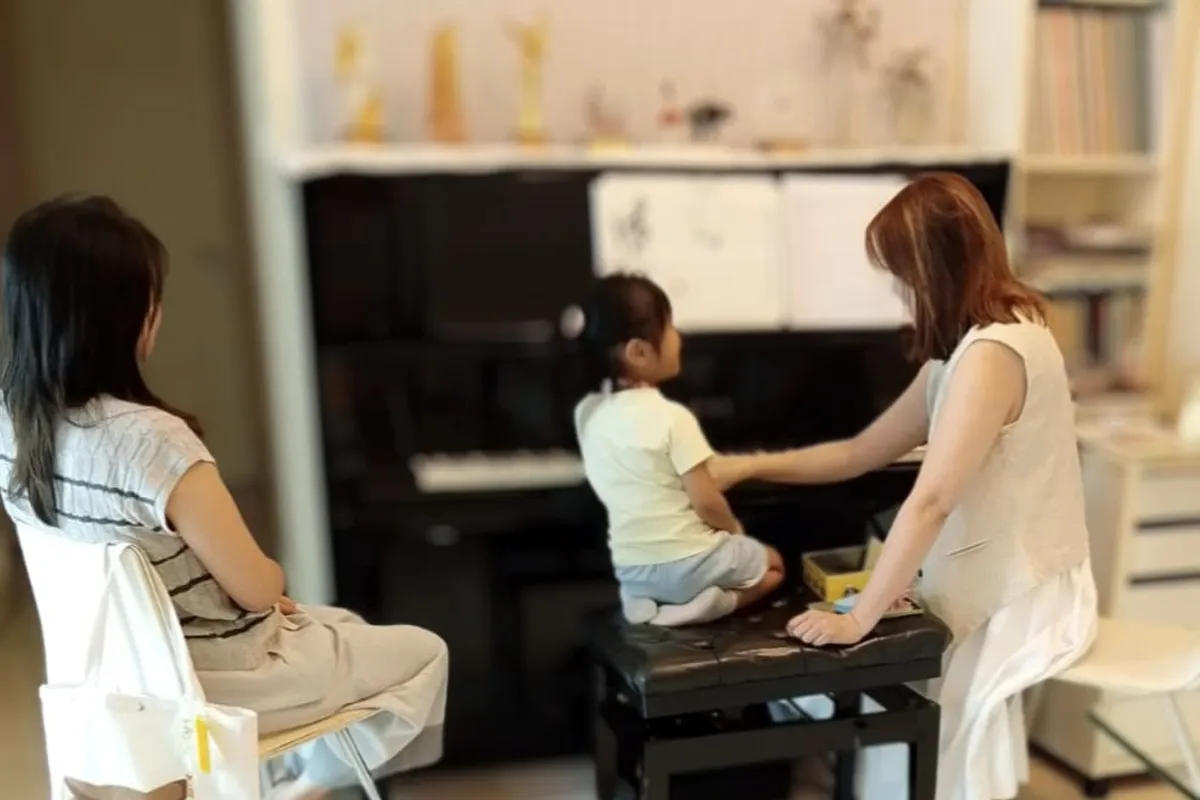
Teaching piano to a lively, restless toddler, a primary student preparing for a grade, a teenager under homework and emotional pressure, or an adult with fragmented time and an interest-led approach — the effective methods are entirely different. Whether a teacher can adjust their approach to students of different backgrounds is often the key to whether teaching lands.
Over years of teaching, teachers of varying experience have often come to observe my lessons. From a teacher-development angle, here is the learning value, for a piano teacher, of observing real, age-specific lessons.
Different Ages, Entirely Different Methods
Each age group needs a different way of guiding:
• Young children: drawing out interest through interactive, concrete means, with a short and flexible lesson rhythm;
• Exam candidates: unpacking technical difficulties and planning practice and progress;
• Teenagers and competition students: deepening from understanding the piece to the poise of every gesture in performance;
• Adults: balancing limited practice time with the musical experience, prioritising confidence and the enjoyment of playing.
Understanding these differences lets a teacher teach to each child's nature, rather than applying one process to every student.
What a Teacher Can Learn From Observing a Real Lesson
Observing one complete, real lesson lets a teacher see far more than the student's playing result:
• The teaching rhythm and ways of guiding at each age;
• The full flow from warm-up, fundamentals and new-piece explanation, to correcting playing and planning homework;
• How to handle common situations like resistance to practice, short attention and stalled progress;
• How to choose suitable studies and pieces for different ages, and simplify complex theory.
The exchange afterwards is also a chance for colleagues to inspire and reflect with one another — a non-judgemental professional exchange, not an appraisal of the host teacher.
Want to Deepen Your Own Age-Specific Approach?
If you're a piano teacher hoping to deepen your age-specific approach by observing real lessons, you're welcome to explore my one-on-one piano consultation — we can work through the focus of teaching design together.
Why "Watching a Real Age-Specific Lesson" Beats Theory Alone
Many teacher-development courses are theory-led, with few real classroom cases for reference, so they're hard to put into practice afterwards. Observing a real one-on-one lesson lets a teacher see, at once, the teaching logic across ages, and bring the ways of guiding and handling they observe back into their own classroom.
For the observing teacher, this is hands-on learning; for the demonstration student, having other teachers present is like a small audience setting, which over time helps them get used to being listened to — easing the nerves of a future exam or performance.
In Closing
A piano teacher's professional growth is a process of continual observation, reflection and learning. Observing real, age-specific lessons offers a hands-on, mutually inspiring space — letting teachers see what teaching to each child's nature actually looks like across ages, and keeping their thinking from being bound by a single standard process.
Further Reading
The Core Value of Lesson Observation in a Piano Teacher's Growth
Ten Years of Teaching Piano, Yet Unsure How to Teach a Four-Year-Old Well?
30+ Years of Teaching: Music Education Has No Standard Timeline
Frequently Asked Questions
How is an observation lesson different from a usual teacher-development course?
Most development courses are theory-led; observing a real lesson lets a teacher directly see the teaching logic across ages and the handling of situations, which is easier to bring back into their own classroom.
Is observation mainly about how well the student plays?
Not only that. More central is observing the complete teaching flow and ways of guiding — how the method is adjusted to different ages and personalities, and how common situations like resistance and short attention are handled.
Does observation disturb the demonstration student?
No. Having other teachers present is like a small audience setting, which over time actually helps the student get used to being listened to, easing future stage nerves.
Is observation an appraisal among peers?
No. It's a non-judgemental professional exchange; both the host and the observer can reference and inspire one another.
Ms. Kannaz Kwok
30+ years of piano teaching experience. Holder of internationally recognised qualifications from the Royal Academy of Music and Trinity Laban Conservatoire.