
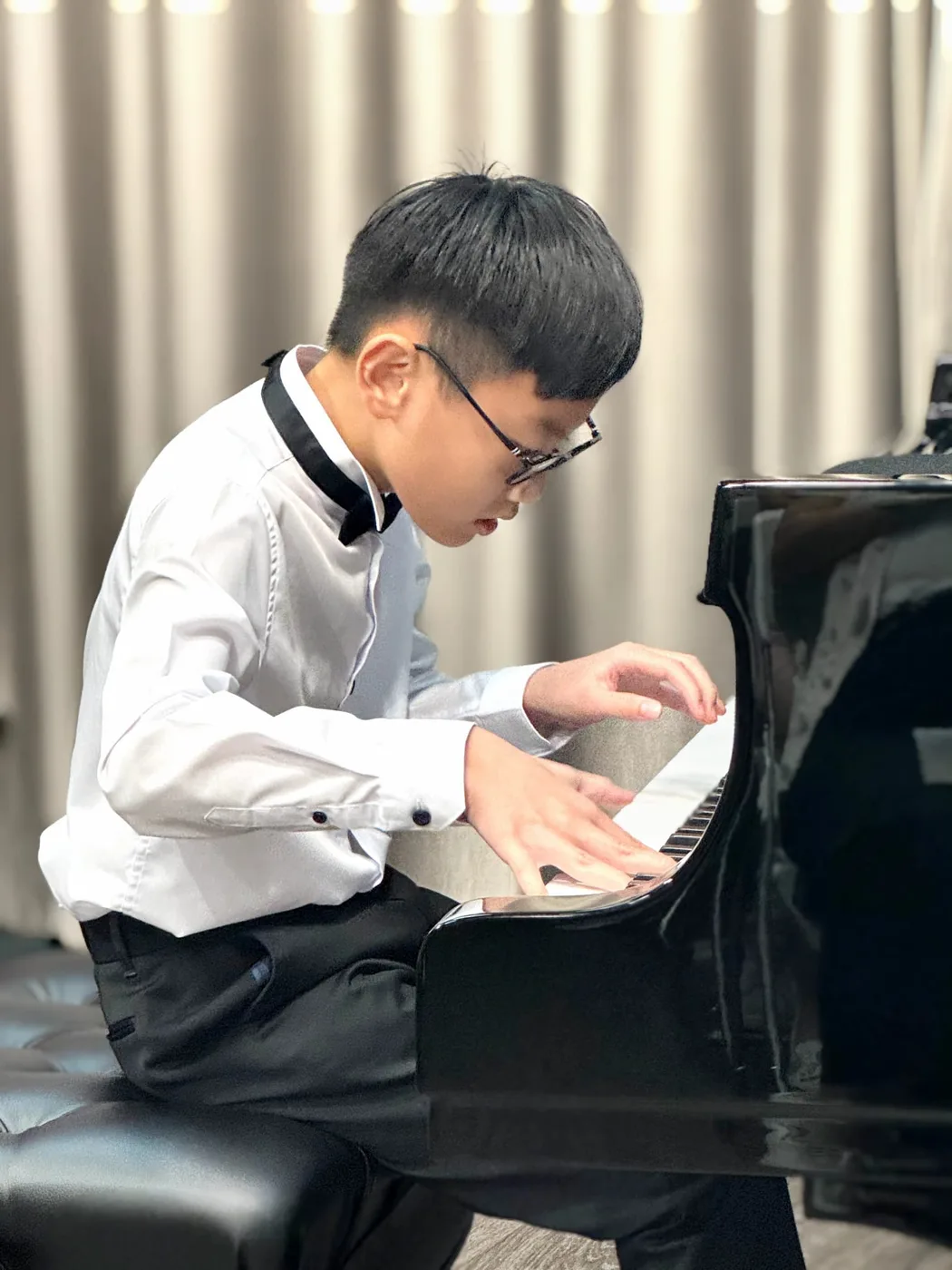
Many learners hold a long-standing misconception: that the left hand only handles “accompaniment.” Since it isn't the main melody, the details inside the left-hand chords are easily overlooked — the chords' character, their tonal changes, and the handling of loud–soft layers.
A Weak Left-Hand Base Surfaces at Higher Levels
Many students have insufficient dedicated left-hand training from the early stages. As pieces get harder, the weak base surfaces: unsteady fingers, a stiff and weak wrist, making the accompaniment thin. In intermediate and advanced pieces, the left hand often is no longer just accompaniment but takes the main melody and becomes the lead; the tonal gap between the hands then widens, and overall expression suffers.
Beyond Technique, Listening Training Is Equally Key
When playing hands together, many people's ears focus only on the right-hand melody, hearing nothing of the left-hand chords' changes, let alone how the left hand coordinates and interacts with the melody; some can't even manage basic balance. When a piece reaches a higher level, requiring the left hand's loud–soft layers to rise and fall with the right hand's emotion, many simply can't cope — the root is insufficient listening training.
Two Core Principles for Strengthening the Left Hand
• Technique — build the left-hand hardware base: steady finger joints and solid finger strength; a relaxed wrist, avoiding stiffness; and training the left hand's own speed and rhythm control. The left hand shouldn't passively follow the right — it needs independent strength and stability to carry accompaniment and also handle melodic passages.
• Listening — learn to hear both voices at once: while playing, the ears can't sit only on the right-hand melody; deliberately catch the left hand's chord changes, tonal thickness and volume at the same time, training the hands to answer and interact for a fitting balance — rather than always keeping the left hand soft.
A Practical Little Exercise
Record the right-hand melody, play it back, and play the left hand while listening to the right-hand melody. Practising the left hand this way builds a sense of interaction and coordination between the hands. Watch that the left hand isn't mechanically following, but adjusting its own tone and volume layers to the rise and fall of the right-hand melody. (See Always Getting Stuck Playing Hands Together?)
In Closing
The left hand isn't a supporting accompaniment — it can be the support, and it can be the lead. Improving finger technique alone isn't enough; the ears must be trained to hear the bass line too. With technique and listening together, the hands can achieve coordinated tone and balanced sound, fully presenting a piece's rich layers. To adjust practice around left–right imbalance, you are welcome to book a one-to-one piano consultation.
Further Reading
Always Getting Stuck Playing Hands Together? A Practice Direction for Coordination
How to Practise the Piano Effectively: Practising Right Matters More Than Practising Long
Scales and Arpeggios: Why Practise Them, and How to Make Them Meaningful
Frequently Asked Questions
Why is the left hand always weaker than the right?
Usually because dedicated left-hand training was insufficient early on, plus too little two-voice listening. As pieces get harder, unsteady fingers and a stiff wrist surface, making the left hand thin.
The left hand is just accompaniment — does it need special practice?
Yes. The left hand isn't only accompaniment; in intermediate and advanced pieces it often takes the melody. A weak base widens the tonal gap between the hands and hurts overall expression.
How do I train the left hand's listening?
While playing, deliberately catch the left hand's chord changes, tone and volume, training the hands to answer each other. Record the right-hand melody and play the left hand along to it, practising coordination and balance.
Is training finger technique alone enough?
No. Technique and listening must go together — fingers with independent strength and stability, plus ears that can hear the two-voice balance — so the hands achieve coordinated tone.
Ms. Kannaz Kwok
30+ years of piano teaching experience. Holder of internationally recognised qualifications from the Royal Academy of Music and Trinity Laban Conservatoire.