
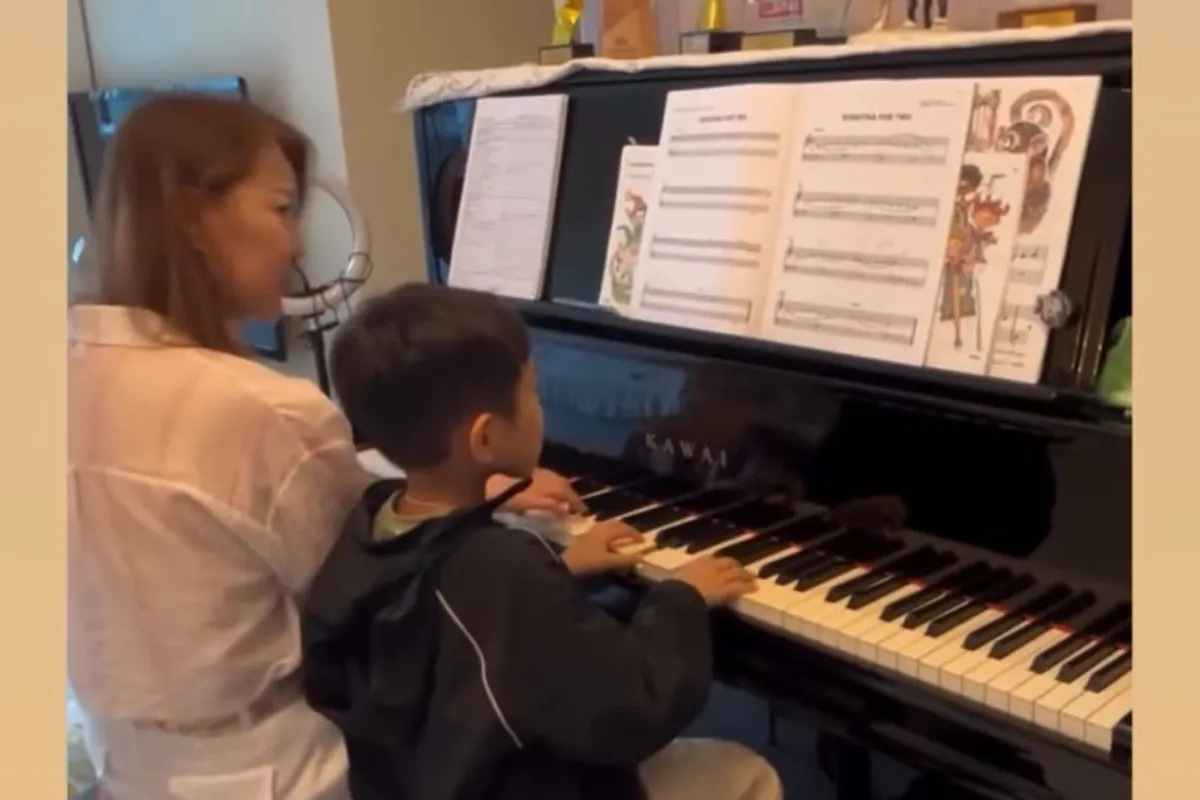
“Should I sit beside them and watch, or let the child practise alone?” This is a shared question for many parents on a child's piano journey. Watch too closely, and it becomes constant correcting and nagging — the child grows resistant, even dependent (“won't practise unless watched”); leave it entirely, and the child may practise carelessly, to little effect. In truth, a parent's role is not to be “half a teacher,” but to create a stable practice environment and positive emotional support. From the angle of “support, not micromanagement,” this article shares a few practical principles for accompanying practice, so it becomes a help between parent and child rather than a source of pressure.
Support, Not Micromanagement
A parent doesn't need to grasp every technical detail, and shouldn't keep interrupting during practice to point out “wrong” or “that doesn't sound good.” Over-involvement tends to put a child's attention on “fear of being scolded” rather than on the music itself.
A better role is to help a child keep a regular practice rhythm and prepare a quiet space, leaving the technical judgement to the teacher. When a parent focuses on company and support, the child is freer to focus on the practice.
Encourage Before Correcting
During practice, it helps to first affirm what the child has done, then gently raise a direction to improve. Even a very small step forward is worth encouraging on the spot.
This isn't “only good news, no bad” — it's building the child's confidence and motivation first, so they are more willing to face the hard parts. A child who practises in an atmosphere of affirmation keeps their interest in music more easily than one under constant fault-finding.
Build Habits, Not a Daily Tug-of-War
Rather than arguing daily over “did you practise,” work with the child to make practice a fixed part of the day — a relatively set time and clear small goals. Once the habit is in place, the times a parent needs to “nag” naturally grow fewer.
Every child suits a different rhythm and practice length; there's no need to compare with others. What matters is that it's steady and sustainable, rather than one long session that's hard to keep up. If you're unsure what arrangement suits your child, a one-to-one piano consultation can help work it out together.
Use Recordings; Let the Teacher Assess
If a parent isn't sure what counts as “practising right,” make good use of the phone to record: have the child record a practice clip and play it to the teacher at the next lesson. This reduces a parent's temptation to make technical judgements, and gives the child a bit more self-awareness while practising.
Put simply: let the teacher assess and the parent support, each to their own role. When a child knows “the teacher will hear this practice,” they naturally take more care, without a parent watching over their shoulder.
When a Child Resists Practising
A child's resistance to practice is often not simple laziness, but possibly a signal about difficulty, method or emotion. There's no need to rush to apply pressure; first understand the reason behind it, or talk with the teacher about adjusting the direction. Treating resistance as a signal to understand, rather than a behaviour to fight, eases the tension between parent and child.
Further Reading
Why Do Children Resist Practising More as They Grow? Eight Roots of Piano Aversion
How to Practise the Piano Effectively: Practising Right Matters More Than Practising Long
Piano Teaching: Don't Overlook the Place of “Emotional Value” in Learning
Frequently Asked Questions
Does a parent need to know piano to help with practice?
No. A parent's role is to provide a stable environment and emotional support, not to replace the teacher's technical judgement. Even without knowing piano, you can support a child through encouragement, habit-building and using recordings.
Until what age should a parent accompany practice?
There's no fixed age. In the younger years a parent is usually more involved; as the child builds a habit of independent practice, you can gradually step back. It varies from child to child.
My child throws a tantrum the moment practice starts — what can we do?
First understand the reason — it may be too-hard material, unclear method or emotional fatigue, rather than simple disobedience. You can slow the pace, break goals down smaller, or talk with the teacher about adjusting, rather than handling it with scolding.
Can I correct my child during practice?
You can gently point out an obvious problem, but shouldn't keep interrupting or repeatedly correcting technical details. Fine technical fixes are better left to the teacher; the parent focuses on encouragement and company.
Ms. Kannaz Kwok
30+ years of piano teaching experience. Holder of internationally recognised qualifications from the Royal Academy of Music and Trinity Laban Conservatoire.