
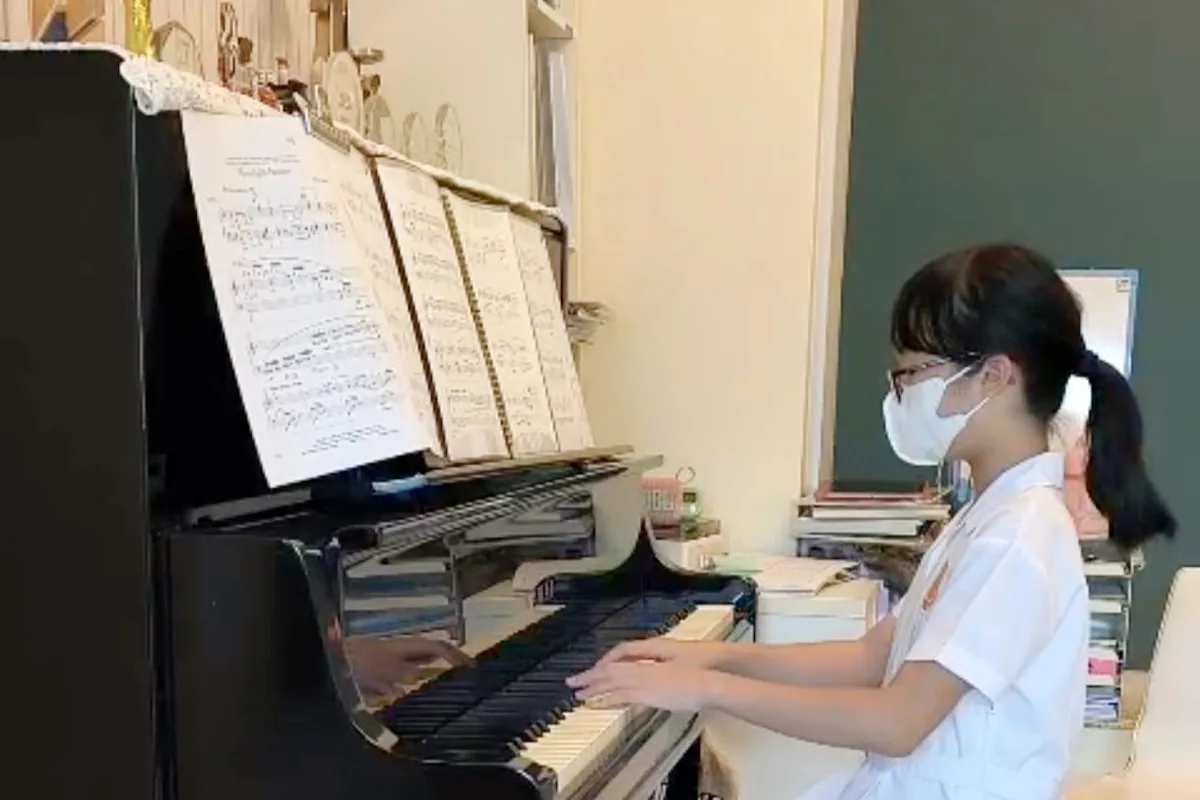
Already playing Grade 6 in second grade — yet more and more discouraged. Where's the problem?
The Student's Background
Hazel, in second grade, started piano in K3. Sensitive to music and a fast learner, she can already play ABRSM Grade 6 works. But her mother saw her growing more discouraged and unhappy at the piano — even talking about quitting — and booked a one-on-one piano consultation.
The Assessment: Not Music, but Muscle Memory
One short consultation revealed a defining feature of how Hazel learns — she doesn't understand the music and then play it; she memorises the whole piece into her muscles.
Her memory is excellent, so at the lower grades (one to three) it worked fine. But at Grade 6 — pieces double in length, harmony grows complex, sections repeat with variations — the portion muscle memory can "hold" keeps shrinking: where she can memorise, she can play; where she can't, she can't.
So Hazel became "good one day, lost the next", and began to doubt whether she could really play at all.
The Way Forward: Rebuild the Foundation Piece by Piece
My advice to the parent was to ease the repertoire difficulty for now, return to the level she never truly internalised, and fill the gaps.
• Formal sight-reading training: no longer leaning on muscle memory — playing from the score, one bar at a time, slowly
• Add musical analysis: teach her to read form, harmonic direction, rhythmic character, colour changes and emotional roles
• Reorganise practice methods: phrase-and-section work, slow practice, metronome, self-checking
This step is hardest for parents — it feels like going backwards. But that step back is what lets her walk steadily and far afterwards.
In Closing
When Hazel practises a piece she has understood rather than notes she has memorised, her stability and confidence gradually return. Her mother said: "She's finally willing to sit down and practise."
If your child shows something similar, a one-on-one piano consultation can help clarify the learning priorities that actually need attention right now.
Frequently Asked Questions
Does playing high-grade pieces mean a strong foundation?
Not necessarily. "Can play" and "plays stably" are two different things. If sight-reading, theory and practice methods aren't yet solid, the gaps surface more at higher grades — especially for children with strong memory, who easily mistake imitation for learning.
What's the downside of skipping levels?
It looks fast in the short term, but around the mid-to-upper grades (about 5 to 7) the foundations not built in parallel tend to surface all at once. The point isn't to chase grades, but to grow sight-reading, analysis and practice methods in step with repertoire difficulty.
My child says they want to quit — should I respect that?
Treat it first as a signal rather than an emotion — it often means the child senses they can't do it but doesn't know why. Once a neutral assessment finds the root cause and you adjust accordingly, confidence often returns faster than expected.
Ms. Kannaz Kwok
30+ years of piano teaching experience. Holder of internationally recognised qualifications from the Royal Academy of Music and Trinity Laban Conservatoire.