
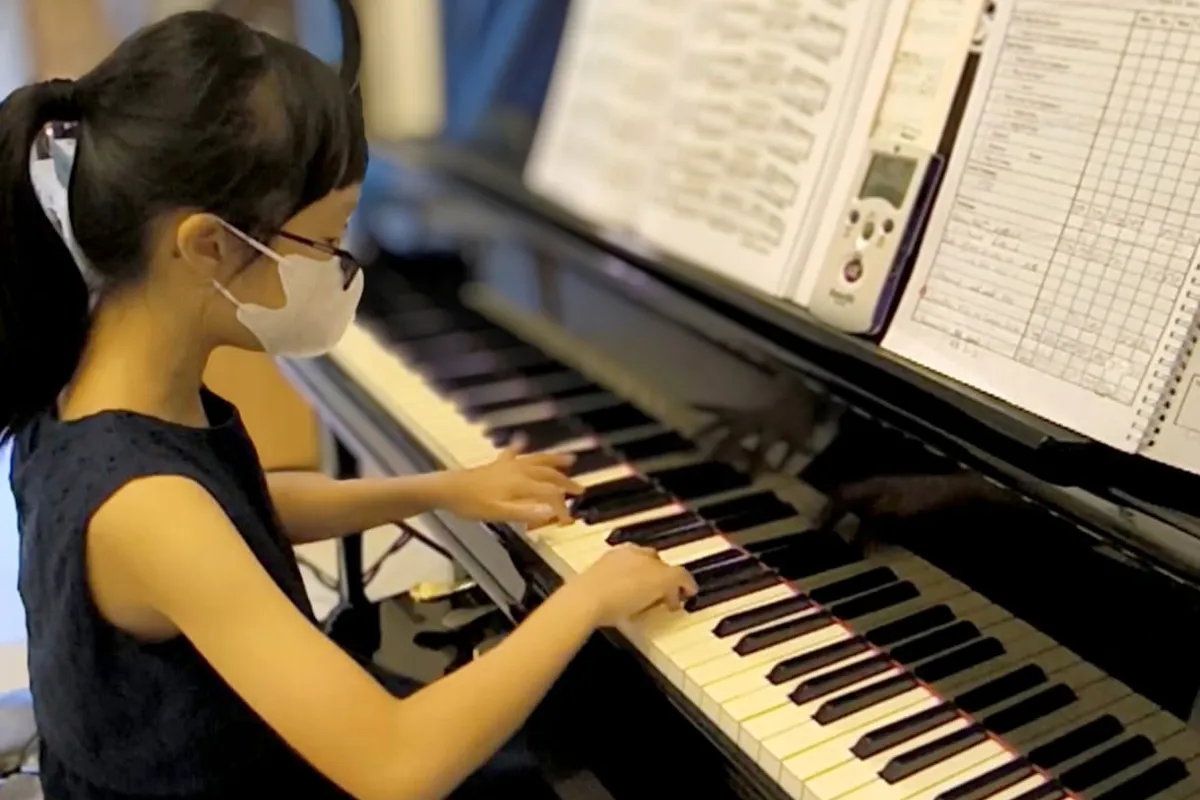
In 30+ years of teaching, I've seen countless beginner families agonise over the same thing at the start: my child is just learning — should we get a digital piano, or go straight for an acoustic? Many parents share the same worry — putting a large sum into an acoustic in case the child is only briefly keen; or starting on a digital to test interest, but worrying that long-term use will affect exams and touch later. Below, drawing on years with all kinds of students, is a real dividing line, for you to weigh against your own family's situation.
If Starting on a Digital: the Baseline Is 88 Keys + Weighted Keys
Whichever you end up choosing, if you plan to start your child on a digital, one prerequisite must hold: it must be a full 88 keys, with weighted keys. Too few keys and later exam repertoire simply can't be played; unweighted keys that feel flimsy easily breed a lazy way of applying force. Over the years, I've seen too many students start on light keys and later spend enormous effort correcting their hand shape. So a digital meeting these two points is only suitable as a transition.
Grades 1–3: A Digital Can Serve as a Trial Phase
Grade 1–3 repertoire is fairly basic overall — simple rhythmic lines, few layers of voicing, and relatively limited dynamics. As long as the keys are properly weighted, a child can work through reading, pulse and basic hand shape well enough for the first three grades' learning and exams. Many families use this time to observe the child's interest and perseverance, without shouldering the heavy cost of a piano from day one — a gradual "testing the water" approach I see often in teaching.
Your Child Moving From Grade 3 to 4, or Struggling With Hand Shape?
If your child is a beginner about to move from Grade 3 to 4, or is struggling with hand shape and support after switching to an acoustic, you're welcome to book a one-on-one piano consultation — I'll plan a suitable direction based on your child's foundation.
From Grade 4–5: An Acoustic Becomes a Basic Requirement
As students rise to Grade 4–5, the demands on fundamentals climb noticeably. From this stage, you need to genuinely train left-hand support and the right-hand frame, and gradually pursue a steady playing speed — long-term use of a digital struggles to meet these:
• The left hand needs solid bass support: Grade 4–5 brings many bass chords and broken-chord accompaniments, needing palm and fingertips to hold the bass firmly. An acoustic has real mechanical resistance, so a child can gradually train the left-hand joints not to collapse and the bass to sound full; a digital's lighter key resistance leaves many students' left hand thin and unsupported, with the weakness more obvious higher up.
• The right hand needs a firm frame: from Grade 4, continuous semiquavers and large leaps grow, so the palm frame must hold without collapsing for the fingers to work independently. An acoustic's key resistance keeps a child unconsciously maintaining a steady frame; long-term digital use tends to leave the palm slack and collapsing, so the fast passages of Grades 6–8 come out messy and uneven.
• Beginning to train an even, clean speed: the scales, arpeggios and fast passages of Grade 4–5 have speed standards, needing fast-but-even playing under a steady hand. An acoustic's key rebound has real resistance to train finger control; many students moving over from a digital find that "fast on the digital, hands scramble on a real piano" — a gap in long-formed touch.
A Practical Dividing Line
A simple, practical line: for Grades 1–3, a properly weighted digital can serve as a trial phase; from Grade 4, left-hand support, the right-hand frame and speed are all indispensable, so an acoustic becomes the basic requirement for daily practice. The earlier you switch, the fewer bottlenecks later moving from Grade 5 up to 6–8.
In Closing
Choosing the instrument is only the start of learning piano; what really decides how far a child goes is the steady building of fundamentals. Digital and acoustic each have their fitting situations — the key is choosing by your child's learning stage, which is exactly what I keep discussing with parents in teaching.
Further Reading
How to Choose Your Child's First Piano Teacher: 7 Questions
Starting Primary One: How Should Piano Learning Adjust?
Is Age 3 Too Early for Piano? The Real Considerations in Teaching a 4-Year-Old
Frequently Asked Questions
Can a beginner start on a digital piano?
It can serve as a trial phase, but hold the baseline: it must be 88 keys with weighted keys. Too few keys or no weighting breeds lazy force and later takes effort to correct the hand shape.
Up to which grade can a digital cope?
Generally, a properly weighted digital is enough for Grades 1–3 learning and exams; by Grade 4–5, an acoustic becomes a basic learning requirement. The actual point still depends on the child.
Why recommend an acoustic after Grade 4?
Grades 4–5 need three fundamentals — left-hand bass support, the right-hand frame, and even speed. An acoustic's mechanical resistance trains these; a digital struggles to, and the weakness grows higher up.
My child isn't adapting from digital to acoustic — what can we do?
Common issues are weak support, a slack frame and uneven speed. Rebuilding hand-shape support and rebuilding finger independence from a slow speed helps the child gradually adapt to an acoustic's touch.
Ms. Kannaz Kwok
30+ years of piano teaching experience. Holder of internationally recognised qualifications from the Royal Academy of Music and Trinity Laban Conservatoire.