
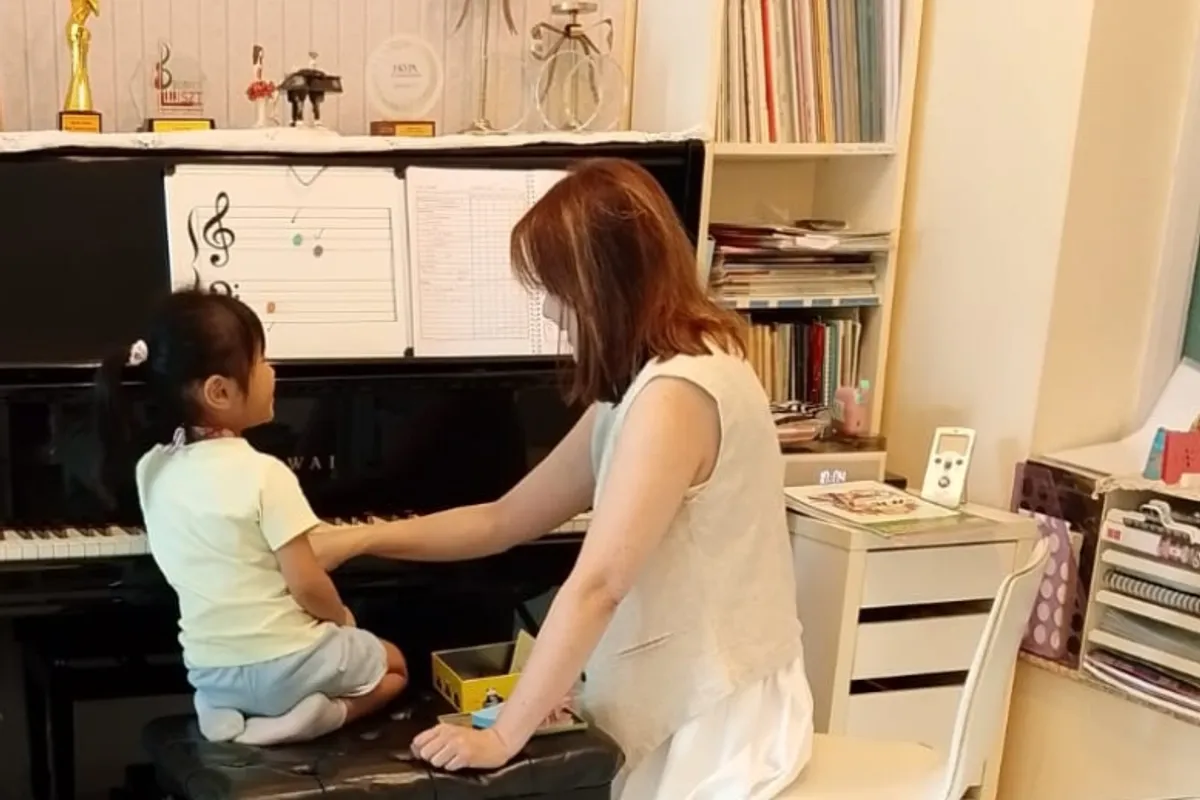
This is a sharing of personal teaching experience, for parents choosing a beginner piano teacher for their child.
Many parents are unsure when choosing a first piano teacher: is it about qualifications, experience, or price? In truth, a child's beginner stage is far more than learning to play a few pieces. The first teacher helps build interest in music, correct hand shape, and foundations in rhythm and theory — and shapes the habits of learning and practice, the attitude to study, and the capacity for independent learning. Poor habits formed at the start can take several times the time and effort to correct later, so choosing a teacher is a step not to be taken lightly.
The Role of the First Teacher in the Beginner Stage
I have taught piano for thirty years. Throughout, my core philosophy has been not only to teach technique and playing, but — from the very first lesson — to gradually nurture the habit of independent learning: focus in class, following guidance, thinking independently, the regularity of daily practice, a sense of responsibility, and how a child faces difficulty. I guide these step by step, so a child learns not just to play, but how to learn and how to face problems in practice on their own. This is the most important foundation for the long road of learning.
I also place great weight on cooperation and communication with parents. Learning piano is not only the child's and teacher's business; the parent's role matters greatly, yet many parents aren't sure where they can help and where they shouldn't step in. So in my teaching, I film a clip of each lesson to share with parents, clearly explaining what they can do and what to avoid when supporting practice at home — so the parent becomes the child's supporter rather than an unintended source of pressure.
7 Core Questions to Ask When Interviewing a Teacher
1. What is your main beginner teaching philosophy — do you prioritise interest or technique? — This shows whether the teacher's approach suits young beginners. A fitting direction balances interest, correct hand shape, theory and a sense of rhythm, while valuing the building of habits and independent learning, progressing step by step and respecting the child's pace. Worth watching for: an approach that over-emphasises learning pieces quickly, with little regard for long-term habits or the child's feelings.
2. How do you handle a young child who can't sit still and tires easily? — Young children have limited attention. A fitting direction offers concrete ways to adapt — breaking the lesson into shorter segments, using games and positive guidance, segmenting practice, adjusting the pace. Worth watching for: pointing the fix solely at "the child needs to cooperate", with little mention of adjusting one's own teaching.
3. How do you adapt to the child's personality while using a systematic method book? — The point is not which book is used, but whether the teacher can use a systematic method as a base and then flexibly adjust to the child's personality, receptiveness and pace, rather than rigidly working through the book page by page.
4. What advice do you give for parents supporting practice at home — what should they do and not do? — A fitting direction clearly defines the parent's supporting role (habit oversight, emotional support) and explains how the technical side is handled, with clear communication. Worth watching for: vague explanations of the home-school division, lacking concrete, actionable advice. (In my own practice, I share a lesson clip each time so parents can tell apart what they can help with and what they shouldn't step into.)
5. How do you usually handle slow progress or resistance to practice? — A fitting direction first seeks the reasons behind it, tries adjusting the way and difficulty of practice, and communicates with both child and parent to find solutions. Worth watching for: a single, direct line of handling, with little exploration across teaching design and the child's emotions.
6. What is the lesson format and feedback like? Will you communicate the child's progress regularly? — You can ask about each lesson's content, how homework is set, how often feedback comes, and whether a trial lesson is offered. A fitting direction clearly explains the lesson mode and communication frequency, with transparent information. Worth watching for: vague explanations that leave parents unable to grasp the learning plan. (I personally share lesson highlights by video clip each time, so parents stay fully informed.)
7. Do you have training or relevant experience specific to early-childhood piano beginners? — Playing well does not equal knowing how to teach a child. Beginner teaching calls for understanding child psychology, the traits of hand development, and ways of guiding suited to children. A fitting direction has relevant beginner experience or background; worth watching for: mainly sharing performance achievements, with little mention of early-childhood teaching experience.
Looking for the Right Beginner Direction for Your Child?
Every child's personality and pace are different. If you'd like to first understand your child's current situation and then plan a suitable beginner direction, you're welcome to book a one-on-one professional piano consultation.
What to Observe in a Trial Lesson
After asking your questions, it's worth arranging a trial lesson to sense the following:
• Whether the teacher communicates with the child gently and patiently;
• Whether they consider the child's hand development and posture, guiding gently and correctly rather than forcing the hand into shape;
• Whether the pace suits the child, without being overly dull or applying unnecessary pressure.
In Closing
Choosing your child's first piano teacher isn't necessarily about finding the most famous or most credentialed; rather, look for a teacher suited to the child's age, with a clear beginner philosophy, patience, a focus on habits and independent learning, the ability to adapt to the child's personality, and good communication with parents.
Learning piano is a long journey. A good start not only lets a child meet the beauty of music, but also nurtures the self-discipline, perseverance and capacity for independent learning that serve a lifetime.
Further Reading
Is Age 3 Too Early for Piano? The Real Considerations in Teaching a 4-Year-Old
Ten Years of Teaching Piano, Yet Unsure How to Teach a Four-Year-Old Well?
Frequently Asked Questions
What matters most when choosing a child's first piano teacher?
Not necessarily the most famous or most credentialed, but a teacher suited to the child's age, with a clear beginner philosophy, patience, a focus on habits and independent learning, the ability to adapt to the child's personality, and good communication with parents.
What should I ask when interviewing a teacher?
You can explore their beginner philosophy, how they handle a restless young child, how they adapt a systematic method to each child, their advice for home practice, how they handle resistance to practice, the lesson and feedback format, and whether they have early-childhood teaching experience.
Does a teacher who plays well necessarily teach well?
Not necessarily. Playing well does not equal knowing how to teach a child. Beginner teaching calls for understanding child psychology, the traits of hand development, and ways of guiding suited to children.
Is a trial lesson necessary?
It's recommended. A trial lets you sense whether the teacher communicates gently and patiently, whether they consider hand development and posture, and whether the pace suits the child.
Ms. Kannaz Kwok
30+ years of piano teaching experience. Holder of internationally recognised qualifications from the Royal Academy of Music and Trinity Laban Conservatoire.