
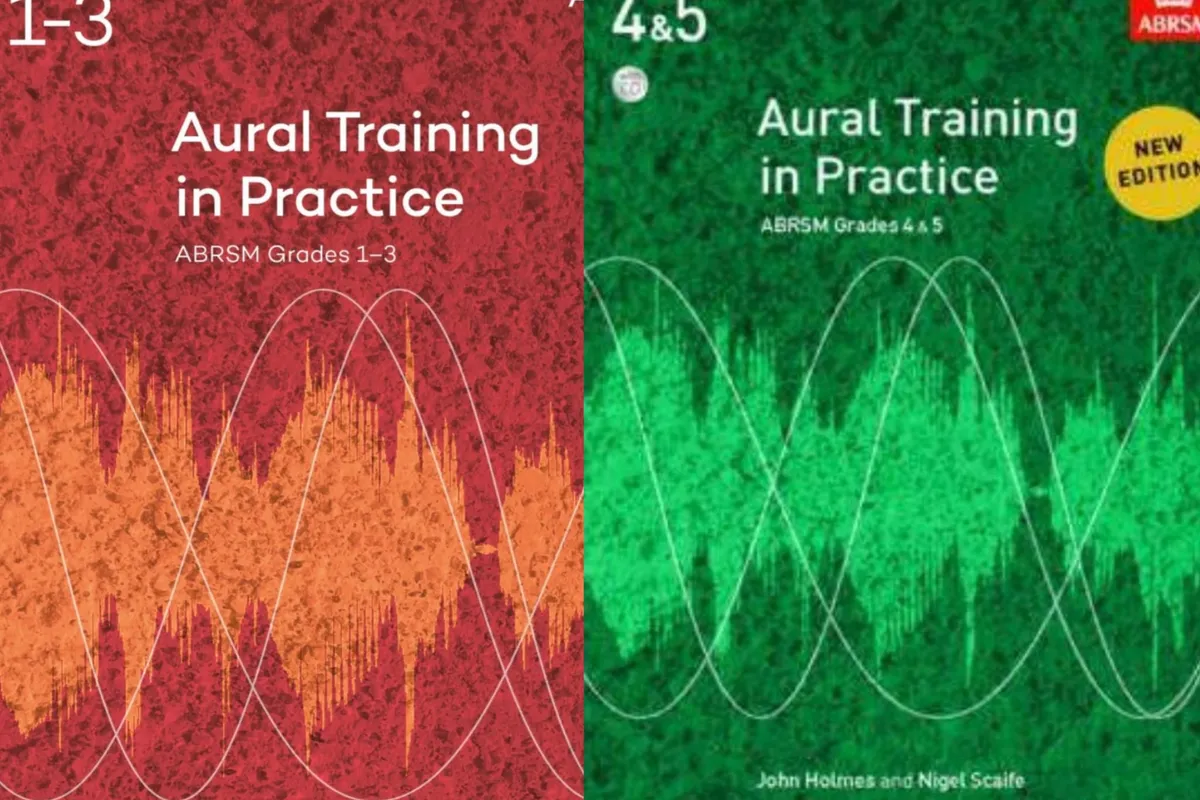
Many families treat the ABRSM grades as their learning yardstick, assuming that following the syllabus and training aural skills is enough to handle pieces at the same level. After years of teaching observation, I see it differently: the Grade 1–5 aural tests are only an entry-level foundation, and confined to the exam scope, students often can't accumulate enough listening to play a piece well. So in my teaching, I deepen the aural content rather than only preparing for the exam.
1. What the ABRSM Grade 1–5 Aural Tests Cover
The early aural tests are designed only to build the most basic musical perception:
• Grades 1–3: mainly keeping the pulse, echoing a short single melody, and distinguishing surface features like dynamics, tempo and legato vs staccato — with no harmony or multiple voices;
• Grades 4–5: add distinguishing major from minor, simple stylistic distinctions, and a short improvised response; the difficulty rises, but it still revolves around a single melodic line throughout.
The whole early aural exam never tests two-part counterpoint, harmonic change, or analysis of phrase structure.
2. Where Confining Aural Training to the Syllabus Falls Short in Performance
Across students of all levels, I see a common situation: even with strong aural-exam results, a student playing Grade 5 repertoire still hits a listening ceiling:
• In two-part passages such as a Bach two-part invention, used to attending only to one melody, they struggle to hear the two independent lines at once, so the texture sounds thin;
• They struggle to catch, by ear, the rise and fall driven by harmonic change and colour, so their dynamics stay flat and lack a natural sense of flow;
• They struggle to tell phrasing and sectional contrast by ear, so the playing easily becomes note-by-note and mechanical, lacking overall musical logic.
This isn't a lack of ability — it's that the early ABRSM aural training simply doesn't cover the all-round listening a performance demands.
Want to Understand Your Child's Aural and Reading?
Every student's listening foundation and blind spots differ. If you'd like to understand your child's current aural and reading, and then plan a suitable approach, you're welcome to book a one-on-one piano consultation.
3. Keeping Aural Training a Step Ahead of the Syllabus
Understanding the syllabus's limits, my aural teaching isn't locked to exam formats; I add a few directions:
• Two-part listening practice, analysed together with polyphonic repertoire;
• Guiding students to feel the emotion and tonal layers brought by harmonic change;
• Through listening to complete pieces, unpacking phrasing and sectional contrast to build overall musical thinking.
By broadening aural training, students not only handle the ABRSM aural exam more comfortably, but can also let their ears drive expression when they play.
In Closing
The ABRSM Grade 1–5 aural exam is a sound tool for checking the basics, well suited to beginners building a foundation; its standards simply have their own scope and level. If learning stops at passing the exam, listening development will be limited. In my years of teaching, deepening aural training appropriately is what lets a student truly command a piece by ear and give a complete, moving performance.
Further Reading
The Complete ABRSM Grade 8 Piano Guide
Sight-Reading Isn't Last-Minute Cramming: Building Long-Term Independence
More Than "Getting Through the Exam": Why I Care About Real Playing Ability
Frequently Asked Questions
If my child passes Grade 1–5 aural, is their listening sufficient?
Not necessarily. Early aural is only an entry-level foundation, mostly around a single melody; it doesn't cover the two-part listening, harmonic change and phrase structure that performance requires.
Why does listening affect playing?
Unable to hear the two independent hands, the colour of harmonic change, and phrasing, a student's playing easily becomes note-by-note and mechanical, with flat dynamics and little overall musical logic.
How can we deepen a child's aural training?
Beyond the syllabus, add two-part listening, guide them to feel the emotional layers of harmonic change, and unpack phrasing and sections through complete pieces to build overall musical thinking.
Will deepening aural training disrupt exam preparation?
No. With broader aural training, students actually handle the ABRSM aural exam more comfortably, while putting their listening to use in real performance.
Ms. Kannaz Kwok
30+ years of piano teaching experience. Holder of internationally recognised qualifications from the Royal Academy of Music and Trinity Laban Conservatoire.