
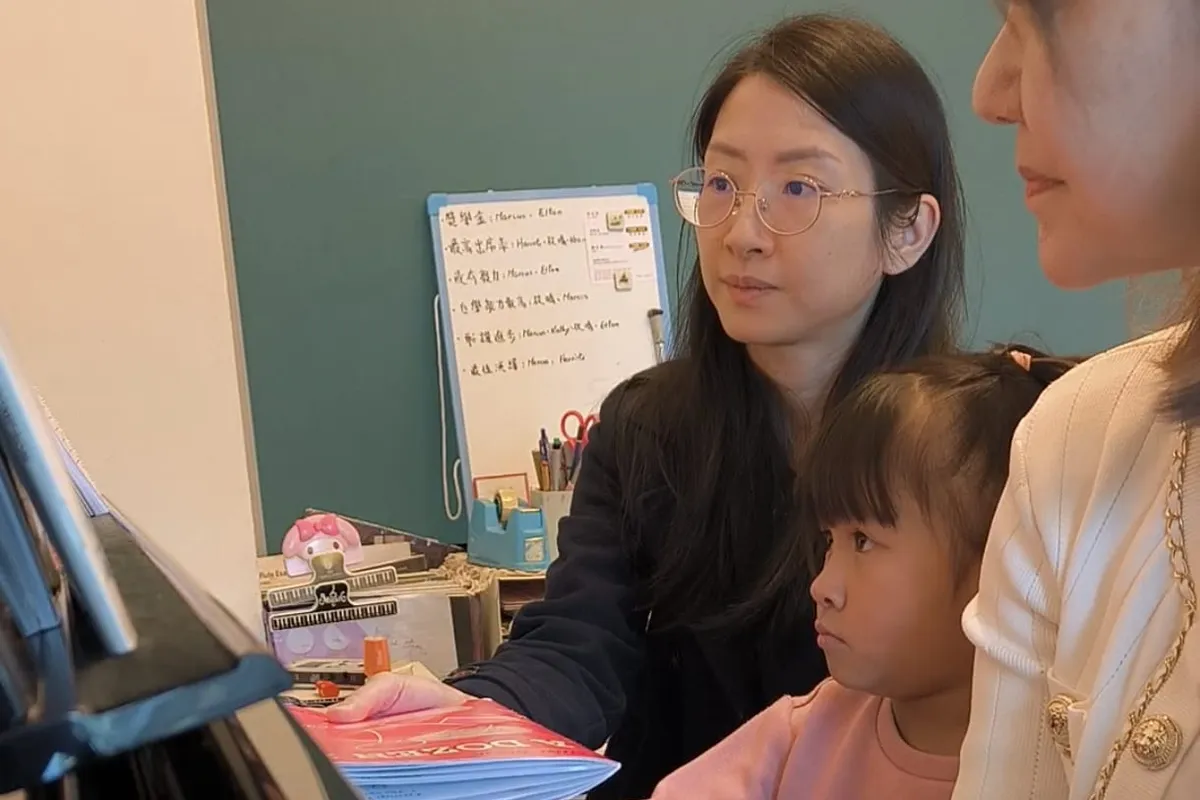
Two years of lessons, two changes of teacher, still stuck — the problem was never that the child wasn't trying.
The Student's Background
A Primary 1 student who started piano in K3. His mother plays herself and can accompany practice; the family had changed teachers twice, yet progress remained stalled. The child grew more and more resistant to practice, so his mother booked a one-on-one piano consultation, hoping to find the real cause.
The Consultation Assessment
In one short consultation, the problem turned out not to be ability — the child actually loves music.
The real root was his personality: strongly self-directed, wanting to "call the shots", disliking following other people's instructions. The traditional "teacher demonstrates, student imitates" model switches a child like this off from the first second.
The Solution: Hand the Lead Back to the Child
I designed a personal piano course for him, built around three practice modules —
• Rhythm: the teacher offers several ways to play — clapping, stomping, rhythm cards, maracas — and the child chooses which one to practise with today.
• Sight-reading: using magnetic boards, game cards and staff games, he strings notes together into a little piece of his own, then practises that.
• Listening: the teacher deliberately plays it wrong, and the student "spots the mistake" — turning "being instructed" into "pointing out errors".
For every new piece, the teacher first plays it through once, then lets the child be the director of the music, interpreting the character of each phrase — turning practice into "telling his own story".
The Turning Point: He Said "You Don't Need to Help Me"
Over this period, the child became able to independently complete the sight-reading, rhythm and listening stages, decide the interpretive character of each phrase himself, and teach himself a complete new piece.
And the most moving moment: when his mother sat down beside the piano again, ready to supervise practice, he looked up and said quietly: "You don't need to help me."
This means the child now owns the ability he gets to keep — the ability to learn by himself.
Frequently Asked Questions
Is "disliking instructions" a personality problem?
No. It only means he needs a teacher who collaborates with him rather than commands him.
Can changing teachers solve the problem?
Not necessarily. It is better to start with one consultation to find the root cause, then decide the next step.
How is a consultation different from a regular piano lesson?
A consultation diagnoses first and plans second — it isn't a lesson, but a way to restore the root of the problem first.
Ms. Kannaz Kwok
30+ years of piano teaching experience. Holder of internationally recognised qualifications from the Royal Academy of Music and Trinity Laban Conservatoire.