
Many parents preparing to — or already — sit with a young child learning piano meet the same worry: they don't know any theory, can't read the stave, have never learned piano themselves, and fear they can't oversee daily practice. Some even conclude, “I can't play, so I have no right to help with practice.”
With thirty years of teaching experience, I can say with confidence: supporting practice at the K3 (early kindergarten) stage is not about correcting a child's playing, but about keeping the practice habit, easing the emotions of learning, and building a steady rhythm. Even with no musical background at all, a parent can do this well. Below, one of our K3 students' parents shares their real practice routine, for your reference.
The Heart of Supporting Young Learners: Presence, Emotion and Rhythm — Not Correction
For a child at the K3 stage, supporting practice isn't about catching every wrong note; it's about three things: keeping a steady practice habit, easing the emotions of learning, and building a regular rhythm. None of these needs a musical background — a parent can do them all.
In other words, supporting practice is not a “test of the parent's ability.” What a child most needs at this stage is someone beside them, offering security and encouragement; correcting technique can be left to the professional teacher.
A Real Parent's Diary: One K3 Student Parent's Practice Routine
The following is a first-person account from one of our K3 students' parents — genuine, and shared for your reference:
1. How do you schedule practice time?
Except when we travel, we set aside time to practise every day, so that “practice” becomes part of the daily routine — we hope the child can keep it up consistently.
2. How long is each session?
We set a modest daily baseline goal, but we're guided more by “finishing what the teacher assigned”: if it isn't done, we extend the time a little to ensure quality, rather than just clocking in for the sake of it. Every child's pace is different, so the length can be adjusted to the actual situation.
3. Do you sit through the whole session, or only part?
I don't watch the whole time. At first, I let him try practising on his own, to build independent reading and thinking. Around the middle, I step in to check his progress and offer suggestions or guidance where things need improving.
4. Does not knowing music affect how you support practice?
Honestly, if you know nothing at all, it is harder to keep close track of the child's progress — but the teacher films everything to note in the lesson, so parents can easily understand the how and the direction of practice. Once the child has built up some knowledge and a self-disciplined routine, we can gradually let go with peace of mind.
5. Can a parent who doesn't know music still support practice?
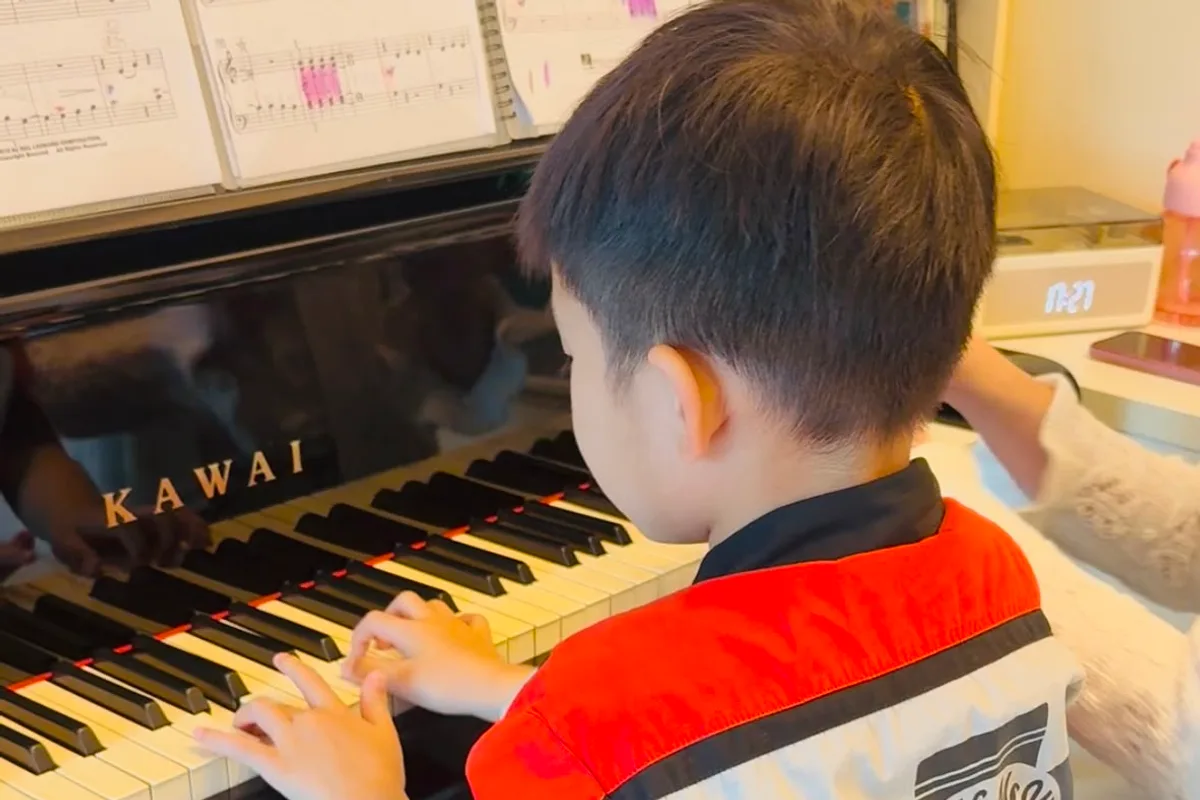
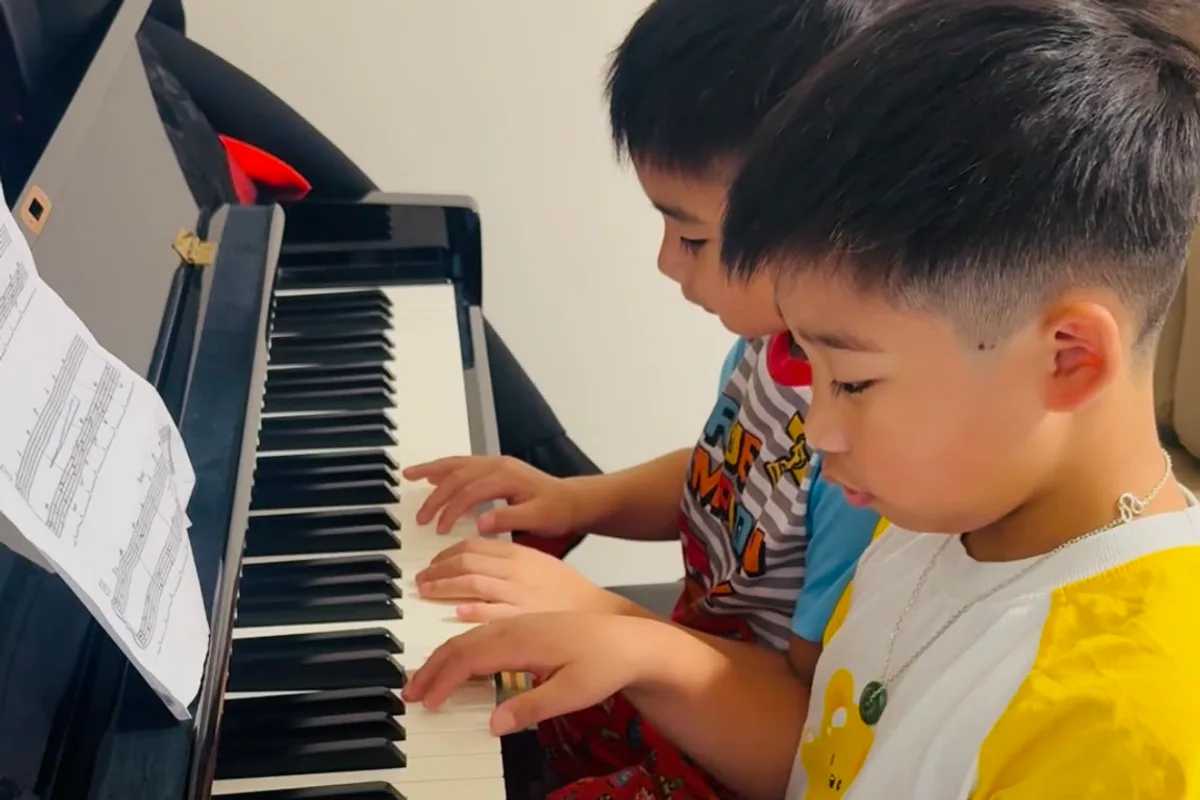
Absolutely! “Being there” is itself the most powerful encouragement. Even our older boy, who is now fairly independent, sometimes still wants us — who don't know much about music — to sit beside him. Supporting practice doesn't mean being a strict teacher; often, simply sitting nearby is a silent support that gives the child a deep sense of security.
6. What do you do when the child gets emotional?
When he hits a passage he can't play or a plateau, it's normal for a child to feel discouraged and act out. I let him release the emotion first, and once he's calmed down, we continue. After accepting the feelings, he also learns to persevere. Learning music isn't only learning technique — it's a process of growth, again and again: facing setbacks → trying again → learning to persevere.
In Closing: Supporting Practice Is Presence, Not an Ability Test
Supporting practice has never been a “test of the parent's ability,” especially for a K3 child just starting piano. You don't need to master the piano or know theory well; as long as you show up regularly, ease emotions and trust the professional teacher, you are already a very capable piano parent.
If you run into difficulties along the way and aren't sure how to handle them, you are welcome to book a one-to-one piano consultation, so we can help your child walk the path of learning piano together.
Further Reading
A Parent's Guide to Practice: How to Support, Without Turning It Into Nagging
Why Do Children Resist Practice More as They Grow? The 8 Root Causes
Is Age 3 Too Early for Piano? The Real Considerations in Teaching a 4-Year-Old
Frequently Asked Questions
Can a parent who doesn't know music help their child practise?
Yes. For young children, supporting practice is about keeping the habit, easing emotions and building a routine — not correcting technique. Even without a musical background, showing up regularly and trusting the professional teacher is enough.
How long should a young (K3) child practise each time?
There's no fixed standard; it varies with the child's focus and state. Rather than watching the clock, be guided by finishing what the teacher assigned, adjust to the actual situation, and value quality over quantity.
Do I need to watch my child the entire time they practise?
Not necessarily. Let the child try practising alone first to build independent reading and thinking, then step in around the middle to check progress and give encouragement and reminders.
What should a parent do when a child gets emotional during practice?
Accept the child's feelings first and let them release, then continue once calm. Facing setbacks, trying again and learning to persevere is itself an important part of growth in learning music.
Ms. Kannaz Kwok
30+ years of piano teaching experience. Holder of internationally recognised qualifications from the Royal Academy of Music and Trinity Laban Conservatoire.