
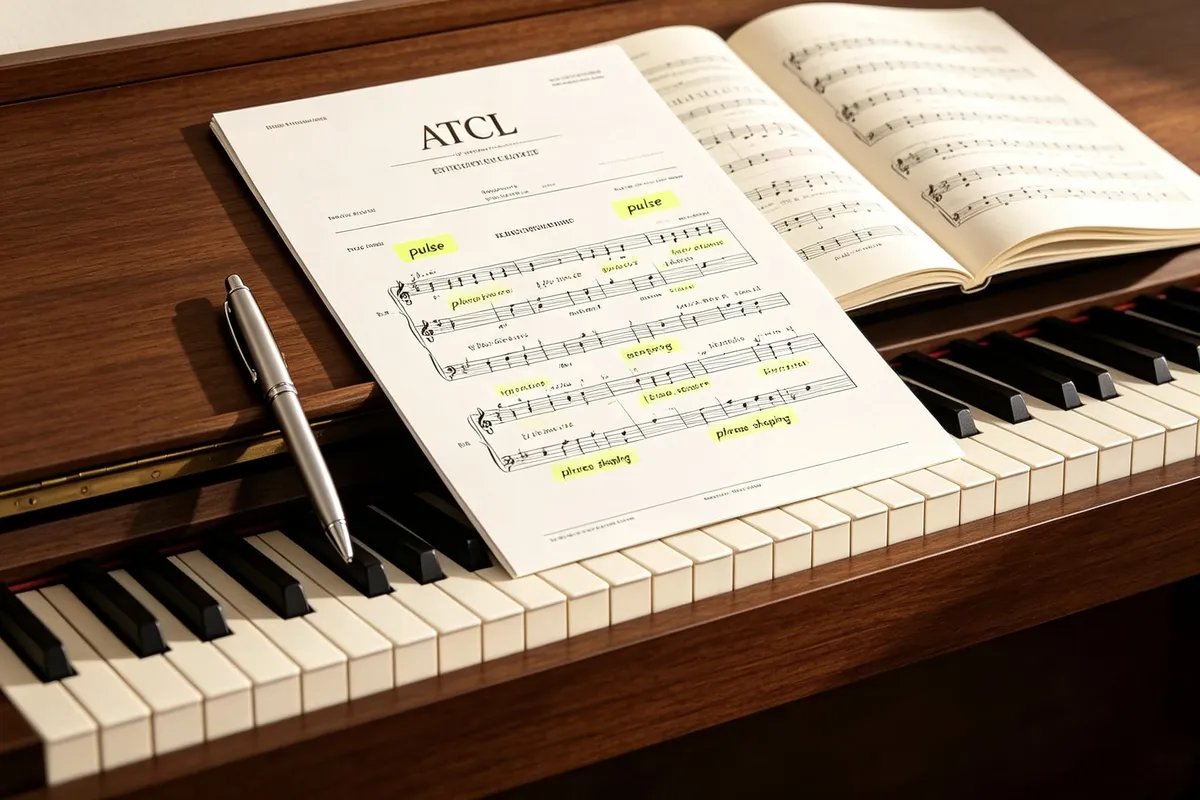
A recent conversation with my student Wendy left me wanting to share a reflection on exams, practice and self-knowledge. Wendy is just beginning her path as a piano teacher, hoping to round out her qualifications and expand her teaching through a diploma exam. During preparation she put in a great deal of practice, yet she knew clearly that her foundation still needed consolidating — technique, interpretation, breathing and pedalling all had much to polish over the long term. This story is not about a score, but about how a person honestly faces herself and replans the road ahead. (Shared with the student's consent.)
Honestly Facing the Real Level
After the mock exam, I shared honestly with Wendy where she stood: on her current foundation, even with intensive drilling, reaching an ideal state in a short time would not be easy; results vary from person to person, and rushing the exam might not be the best choice. I also set out the areas to keep improving: dynamic layers, pedalling and breathing, shaping a piece's atmosphere, and playing steadily away from the metronome.
Many students, hearing a teacher speak plainly of their shortcomings, feel discouraged. But Wendy chose to face it openly, and shared the pressure she was under — chasing an exam goal while sustaining her teaching income, with real emotional strain under those layered pressures. To be willing to see honestly where you stand itself takes great courage.
Slowing Down to Build the Foundation First
What was precious is that Wendy was willing to take the advice on board and replan: rather than rushing to enter, she slowed down to fill the gaps first. She also came to feel deeply the limits an unsteady foundation brings, and noted that when she teaches, she will keep in mind that fundamentals are the starting point of all interpretation.
Going step by step, or postponing an exam, is never failure. Music cannot be rushed; forcing the finish line often only wears down one's love for it. Deep, patient work matters far more than a hurried sprint. If you'd like an objective sense of where you stand and the direction ahead, you are welcome to book a one-to-one piano consultation.
For Learners: Tell Apart “Wanting to Pass” and Real Ability
An exam is a stage goal, not the destination of learning music. A learner is worth learning to tell apart “the wish to pass” and their real ability — the two are not always the same.
It also helps to try to listen to professional, hard-to-hear advice, and to learn to choose; there's no need to force yourself to reach every goal at once. More importantly, don't let one exam's result define whether you are suited to music or whether you love to play.
For Fellow Educators: Sincere Company Over Constant Praise
As a teacher, I've always believed sincerity should come before pleasing. Letting a student gently and honestly understand their real level is what is truly responsible for the long run; constant praise alone may not help a student grow.
An exam is only a tool for review, not the destination of learning music. Beyond technique, we should see the life pressures behind the score, and accompany students in coming to know themselves. May every learner dare to face their real self; and may every teacher have the courage to sincerely walk with students through the highs and lows.
Further Reading
An ATCL Exam as a Starting Point to Rediscover Music — and Yourself
There Are No Shortcuts in Fundamentals: On Rushing the Diploma Level
Beyond “Passing the Exam”: Why I Care More That Students Can Truly Play
Frequently Asked Questions
Should I force an exam entry if my foundation isn't solid yet?
It depends on the student's goals and situation. If the foundation still needs consolidating, slowing down and postponing to fill the gaps first is often more worthwhile than rushing. The actual arrangement is best assessed with the teacher.
If my teacher points out my shortcomings, does it mean I'm not suited to piano?
No. Honestly noting what can improve is meant to help you see your direction more clearly. One exam, or a moment's level, does not define whether you are suited to music or whether you love to play.
What should a trainee teacher preparing a diploma watch for most?
Fundamentals are the starting point of all interpretation. Technique, dynamic layers, pedalling and breathing, and shaping a piece's atmosphere all need to be built step by step; a solid foundation also gives more assurance when teaching later.
Can an exam score represent musical ability?
An exam is one tool for reviewing learning, not the destination. Behind a score there is still understanding, expression and long-term musical growth — it's best not to define overall ability by a single result.
Ms. Kannaz Kwok
30+ years of piano teaching experience. Holder of internationally recognised qualifications from the Royal Academy of Music and Trinity Laban Conservatoire.