
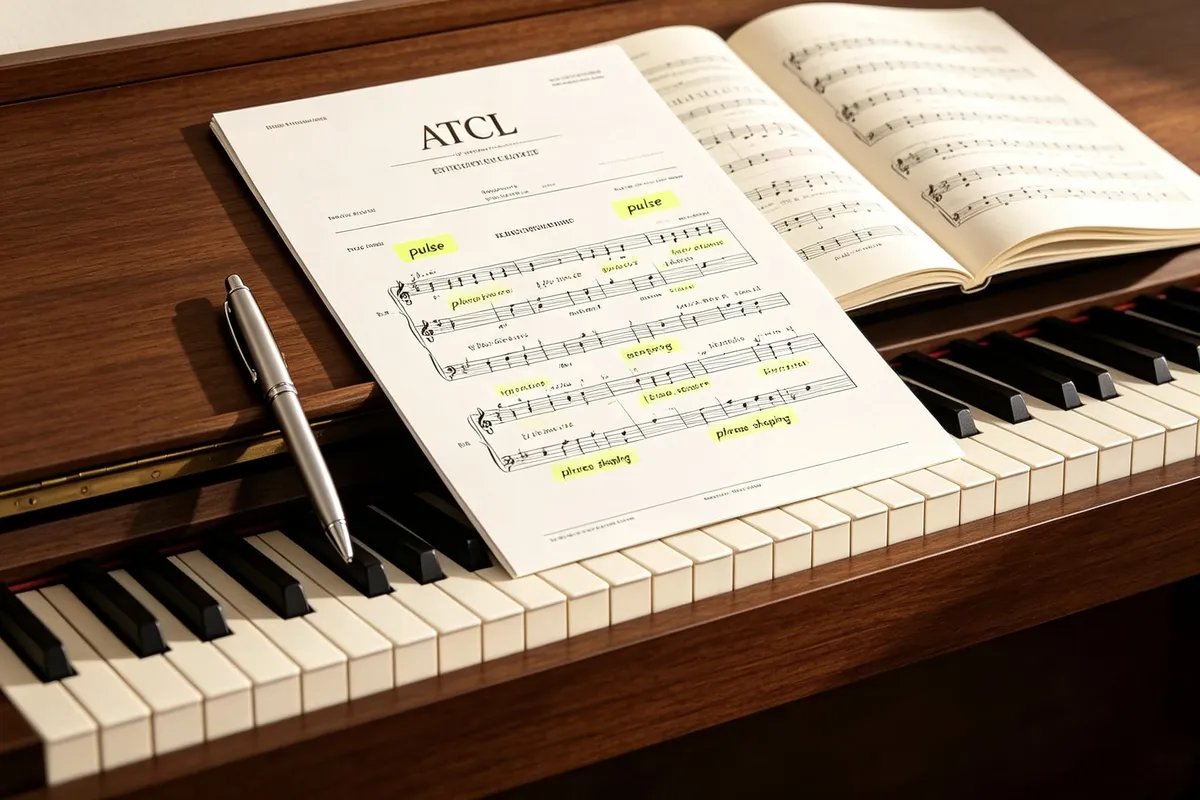
Many people who learn piano look only at the pass certificate and the score. But over the past year, my student Christina chose to set down years of ingrained playing habits and rebuild her whole musical outlook and technique from the ground up. That path of rebuilding also made me feel, deeply, that an exam is never the destination, but an objective mirror — showing the problems accumulated over the years, and recording every step teacher and student polished side by side. This article draws on Christina's own written reflection and the examiner's comments to unpack the gains and the way forward, for students and parents who are preparing for exams or rebuilding their foundation.
Why Sit the Exam Knowing a Pass Was Unlikely
This student had, in earlier years, built up some less-than-ideal playing logic, and we knew from the outset that a shorter span of time might not be enough to fully reach the ATCL pass standard. After several in-depth talks and working through her mindset, she still chose to sit the exam.
For her, the exam was a complete self-audit: through the examiner's professional, neutral comments, to properly set down the old patterns, and to see clearly — after a period of correction — her real room for progress and the foundations still to be filled. This mindset of treating the exam as a mirror is itself a mature attitude to learning.
Christina's Own Learning Reflection
Here is a reflection Christina wrote in her own words:
“Under Ms. Kwok's teaching, this year I've changed quite a few bad habits, learning to listen to music with my ears and to shape the sound I make with my own ideas. My technique improved too: the progress in shaping gave my music a sense of direction, better balancing finally let melody and accompaniment work together, better articulation made pieces cleaner, a measured sway of the body made the music softer and stronger, and a change in tone colour let me produce sounds of different styles. I also see my shortcomings more clearly: I've begun to listen consciously to the pedal's effect, but still need work; my rubato is insufficient, leaving the music short of elasticity, my ritenuto is sometimes unnatural, and emotional expression is what I most need to work on. Although my ATCL score did not reach a pass, I'm deeply grateful for Ms. Kwok's patient, systematic teaching and encouragement, and I'll keep working hard.”
Progress the Examiner Recognised: A Rebuilt Musical Voice
In Christina's own reflection, she noted that she had learned to listen to music with her ears and to shape her playing with her own ideas; the progress in shaping gave the music a sense of direction, the improvement in balancing finally let melody and accompaniment work together, better articulation made the playing cleaner, and a change in tone colour let her produce sounds of different styles.
Against the examiner's marking criteria, over this time we rebuilt musical perception and phrase-shaping thinking from the ground up, and this part drew the examiner's positive recognition, corresponding to several core concepts: a stable inner pulse, phrase shaping, cantabile melodic expression, unity of tone quality, and the shaping of a piece's character. To build a complete logic of musical expression within a relatively limited time is a hard-won breakthrough.
Foundations Still to Deepen: The Examiner's Directions
As Christina herself sensed, and against the examiner's dimensions — fluency and accuracy, technical execution, and musical communication — the following long-accumulated areas still need time to rebuild from the ground up:
• Accuracy: pitch and the precision of double notes are not yet stable, rooted in long-standing unevenness of finger strength; this needs ongoing finger-evenness training.
• Pedalling: the one she felt most, and the one needing the most time. Without a systematic listening foundation in the past, it was hard to hear the tonal change the pedal brings in real time, and limited foot flexibility made timing and depth hard to control. Through isolated pedal-listening practice and foot-flexibility work, we gradually built the link between ear and foot.
• Texture: handling the overall sound architecture is more than separating the two hands — it involves bass support and the balance between inner voices and the melody; through separate multi-voice practice and dynamic-contrast work, a sense of voice balance is built step by step.
• Ornamentation and elastic tempo (rubato / ritenuto): the evenness of fast note groups and the measure of tempo flexibility still need slow, broken-down practice and metronome work to shape.
These weaknesses are not a momentary lapse, but deep-seated issues from a long lack of systematic training. Ingrained habits are hard to change; though not fully resolved, the room for improvement in each has clearly narrowed.
An Exam Is a Mirror
As her teacher, however much effort this time took to correct point by point and guide again and again, I am genuinely happy for her. The score was never the answer to our practice together; the most precious gain is that she found the courage to set down habits held for years, follow the teaching steps fully, and relearn a correct musical outlook, playing method and listening habit from the start.
Through the examiner's objective, neutral comments, together with her own written reflection, we see clearly the progress after this period of correction, and have located the areas to keep polishing over the long term — no longer practising blindly. An exam is never just a pass certificate; it is a ruler, measuring habits built over years, and recording a teacher and student's persistence in correcting course. Whatever the score, may every friend who learns piano dare to face their shortcomings, see their own growth, and walk on steadily and with ease. If you too would like an objective sense of where you or your child stands and the direction ahead, you are welcome to book a one-to-one piano consultation.
Further Reading
Replanning After Two ATCL Piano Exams Fell Short: How to Rebuild the Preparation
There Are No Shortcuts in Fundamentals: On Rushing the Diploma Level
Beyond “Passing the Exam”: Why I Care More That Students Can Truly Play
Frequently Asked Questions
If the score didn't reach a pass, was this learning still worthwhile?
Very much so. A score only reflects one moment's performance, while setting down years of wrong habits and rebuilding a correct musical outlook and technique is the far more important, long-term gain. Treating the exam as an objective mirror lets you see your progress and direction more clearly.
Why are old playing habits so hard to change?
Muscle memory and listening habits formed over a long time are deeply ingrained; rebuilding takes time and systematic training — correcting phrase by phrase and comparing by ear again and again. Improvement happens gradually rather than all at once, and how long it takes varies from person to person.
Why is the pedal seen as the hardest area?
The pedal involves real-time listening and foot coordination — hearing the blend and clarity of the sound while controlling the timing and depth of each change. Without systematic listening training in the past, this link takes a longer time to build.
Should one sit the exam while rebuilding the foundation?
It depends on the student's goal and mindset. If the exam is treated as an objective self-audit, using the examiner's comments to set direction, sitting it can be very valuable; if the focus is only on pass-or-fail, it is better to assess with the teacher first whether it is suitable.
Ms. Kannaz Kwok
30+ years of piano teaching experience. Holder of internationally recognised qualifications from the Royal Academy of Music and Trinity Laban Conservatoire.