
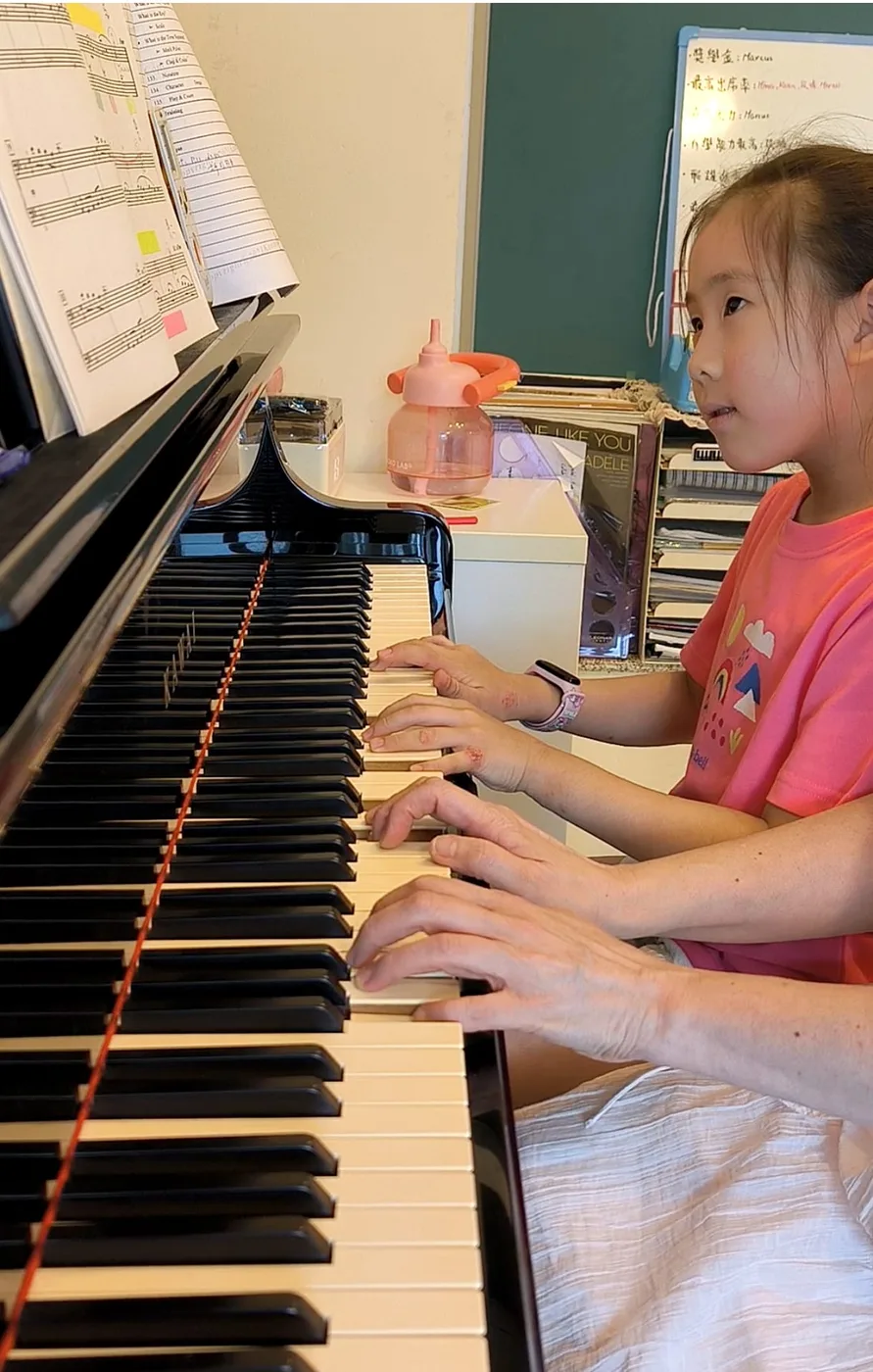
Many Hong Kong parents want their children to meet music early, and many start piano young. But one phenomenon is increasingly common: after a while, a child seems able to play a few pieces, yet the foundation is shaky and motivation gradually fades. At the very start, building a complete, solid foundation matters far more than rushing to play out songs.
Only Chasing “Playing Songs Fast” Is a Common Pitfall
If reading, rhythm and theory — these core fundamentals — are skipped from the start in the rush to play songs, then even a played piece is only a surface result. The child struggles to gain real success, long-lagging fundamentals pile up frustration, love of music is worn away, and finally the child resists practice and music. (See When a Student Plateaus: Is It Talent, or Method?)
A Music Assessment: The First Step to the Right Path
Through a thorough music assessment, an experienced teacher can look beyond surface playing and objectively unpack a child's real state: reading, rhythm and pulse, theory, and learning habits. This finds the hidden blind spots, rather than blindly following a set textbook.
A Real Case: From Resisting Practice to Practising Willingly
Take a seven-year-old student (a pseudonym, Clarie): over two years of learning, she stayed at the level of playing songs, lacking systematic foundation training, with slow reading and a weak sense of pulse; practice lacked motivation, and she even thought of giving up — a portrait of many children learning music.
Through a first music assessment, the teacher pinpointed the accumulated problems, then began targeted teaching, focusing on pulse training and theory, in a relaxed atmosphere without undue pressure. After a period of targeted learning, the change was clear: the child could play new pieces successfully, gained a real sense of achievement, and went from resisting practice to practising willingly, with a far more positive attitude.
A Parent's Account
“My child is seven this year and has learned piano for about two years. Before, it was just playing songs, with no foundation training — slow at reading, unable to count beats, no motivation to practise, even wanting to stop. Then we found Ms Kwok. She is very experienced; after the first assessment she had already spotted the issues, then guided my child through targeted pulse training and taught theory — a relaxed, pressure-free process — and my child soon played new pieces successfully, with real satisfaction. Since then my child even practises on their own, with an increasingly positive attitude.”
In Closing
Learning music is not a pursuit of a quick performance, but nurturing musicianship step by step. Building a base at the start, seeing a child's real level through a professional assessment, and planning a suitable direction — this lets a child gain joy and achievement, and enjoy music healthily for the long term. To understand your child's real learning state, you are welcome to book a one-to-one piano consultation and music assessment.
Further Reading
Early Childhood Piano: How Parents Can Prepare and Support
Why Do Children Resist Practice More as They Grow? The 8 Root Causes
Frequently Asked Questions
Starting out, should a child build fundamentals first or learn songs first?
Build fundamentals first. Skipping reading, rhythm and theory to play songs fast tends to be only a surface result; the gaps surface later, and frustration accumulates.
What is a music assessment, and how does it help a beginner?
It's an experienced teacher objectively unpacking a child's reading, rhythm, theory and learning habits to find hidden blind spots, then planning a suitable direction — rather than blindly following a textbook.
If a child resists practice, is it always a lack of talent?
Not necessarily. Often it's weak fundamentals and a lack of real success. Finding the crux through assessment and strengthening it, the child regains achievement and the attitude usually turns positive.
What matters most at the starting stage?
Core fundamentals — reading, rhythm and pulse, theory — and good learning habits. A solid base lets a child enjoy music healthily for the long term.
Ms. Kannaz Kwok
30+ years of piano teaching experience. Holder of internationally recognised qualifications from the Royal Academy of Music and Trinity Laban Conservatoire.