
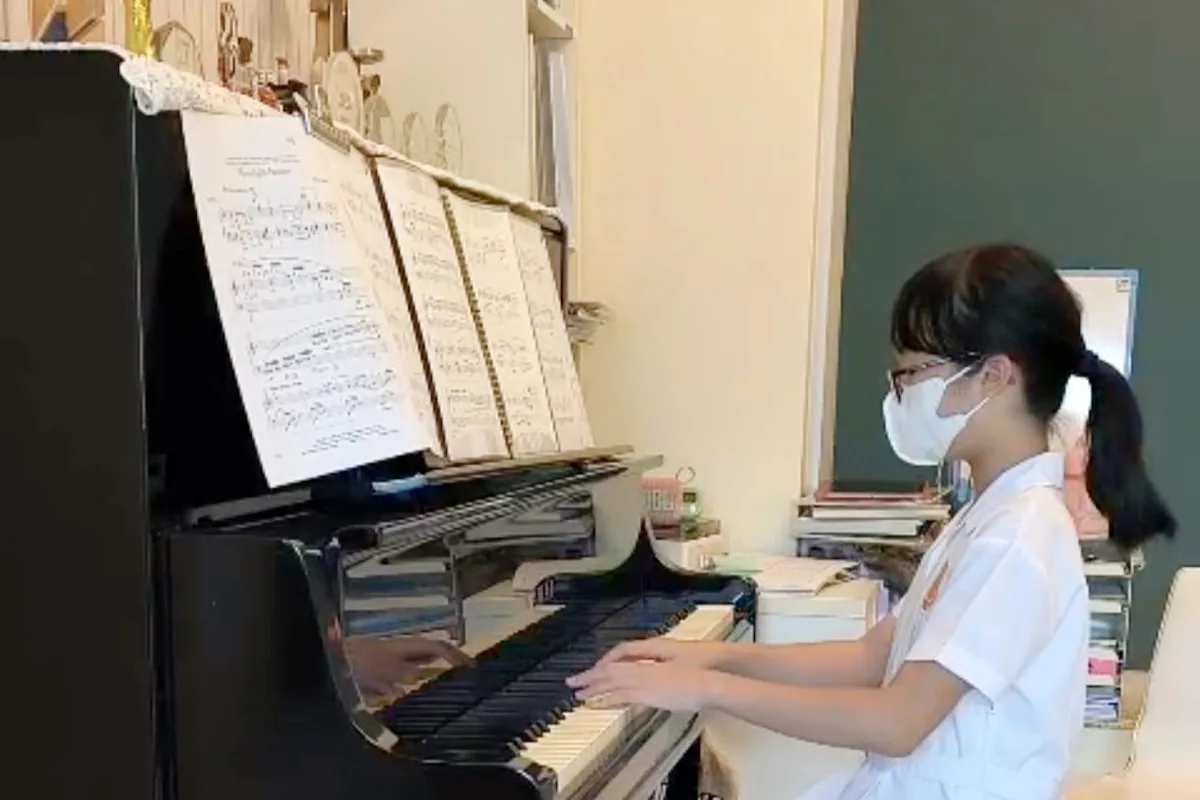
“They've learned for a while, but my child doesn't seem to be making any progress” — this is a question in many parents' minds. Seeing a child practise yet show no results, it's hard not to worry. But “no progress” is really a vague feeling that needs unpacking: behind it may lie practice method, focus, repertoire difficulty, a gap in expectations, or even a stage where the child is accumulating something not yet visible. This article unpacks the possible causes and how to adjust.
First: Is It Really No Progress, or Progress You Can't See?
Progress in piano is not always linear or visible. Some growth happens where you can't see it — inner ear, sense of rhythm, fluency of reading, understanding of music. These don't immediately show up as “faster, harder,” yet they are the foundation for later breakthroughs. So the first step is to tell apart: is the child truly stalled, or accumulating a stage that hasn't yet surfaced? (See There Is No Single Standardised Timeline in Music Education)
A Few Common Causes
• The wrong practice method: playing a piece through many times without slow, sectional work on the hard parts — “practising long but not right.”
• Insufficient focus: distracted during practice, so long sitting yields little effective practice.
• Repertoire difficulty mismatch: too hard brings repeated setbacks, too easy lacks challenge — both weaken the sense of progress.
• Rushing speed on an unsteady base: shaky fundamentals in sight-reading, rhythm and finger control make it easy to get stuck moving up.
• A gap between expectation and reality: the pace a parent or child expects may not match the child's actual developmental stage.
Adjustments Worth Trying
• Put the focus on “practising right,” not “practising long”: slow, hands-separate, sectional work on the hard parts is more effective than blind repetition. (See How to Practise the Piano Effectively)
• Review repertoire and fundamentals with the teacher: let a professional assess the child's weak spots and adjust accordingly.
• Observe the child's emotions and motivation: resistance or lack of interest also affects progress, and needs understanding rather than pressure.
• Adjust expectations: shift the focus from “which grade, how hard” back to “are abilities steadily accumulating.”
If you're not sure where the crux of “no progress” lies, you are welcome to book a one-to-one piano consultation for a professional to objectively assess the situation and direction.
In Closing
“No progress” is often not that the child isn't trying, but that some link — method, repertoire, expectation or developmental stage — needs adjusting. Rather than anxiety, unpack it calmly and address the cause, and give the child a little more time and space. Learning music is a long-term accumulation; steady forward motion matters more than momentary speed.
Further Reading
How to Practise the Piano Effectively: Practising Right Matters More Than Practising Long
30+ Years of Teaching: There Is No Single Standardised Timeline in Music Education
Why Do Children Resist Practice More as They Grow? The 8 Root Causes
Frequently Asked Questions
My child seems stuck at piano — is it a lack of talent?
Usually it's unrelated to talent. “No progress” often comes from adjustable factors like practice method, repertoire difficulty, focus or a gap in expectations; some growth also happens in unseen areas like inner ear and reading, which take time to surface.
They practise a lot — why still no progress?
The key is practising right, not long. Repeatedly playing a piece through without slow, sectional work on the hard parts is limited. Targeted work on weak spots is often more effective than long repetition.
Should I push harder when my child isn't progressing?
Pressure isn't necessarily effective and can deepen resistance. It's better to find the crux with the teacher, adjust method and repertoire, and understand the child's emotions and motivation.
How do I know if my child is truly stalled or progressing invisibly?
Ask a professional teacher to assess the child's actual state in inner ear, rhythm, reading and fundamentals. This unseen accumulation is often the foundation for later breakthroughs.
Ms. Kannaz Kwok
30+ years of piano teaching experience. Holder of internationally recognised qualifications from the Royal Academy of Music and Trinity Laban Conservatoire.