
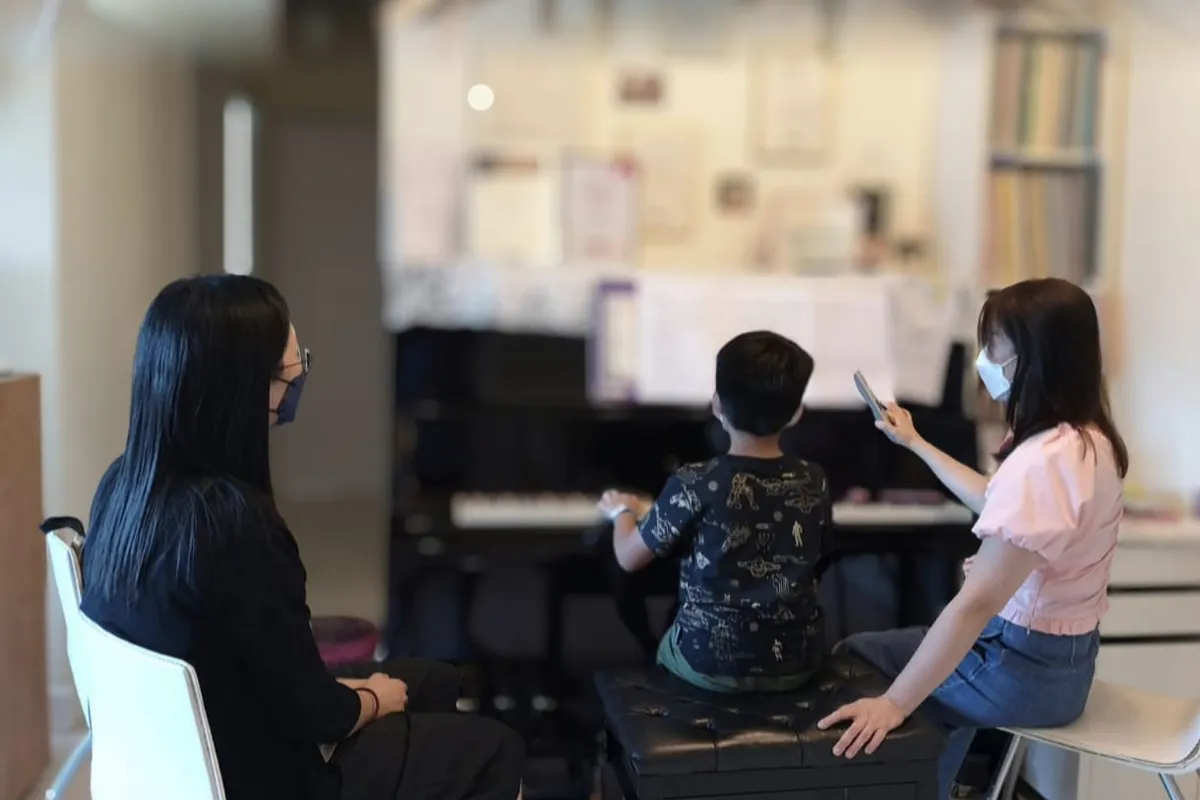
“What are the benefits of learning piano for my child?” This is a question many parents weigh before deciding to start. Some hope their child gains a skill, some look forward to a certificate, and some simply want their child to experience music. Whatever the starting point, what learning piano gives a child is far more than “being able to play a few pieces.” Over a long learning process, a child quietly develops focus, patience, coordination and emotional expression. From a neutral, educational perspective, this article gathers the many-sided value of learning piano for a child’s growth — without exaggeration or promises, simply sharing honestly that its meaning often goes beyond a skill itself.
Focus, Patience and Perseverance
Learning piano is a process that calls for long-term commitment. A child learns to sit still and concentrate between the score and their hands, and gradually to accept that progress takes time. In repeatedly practising a passage and gradually overcoming its difficulties, a child builds focus, patience, and the perseverance not to give up easily in the face of difficulty. Keeping to regular practice also helps a child build a sense of time and learn to plan their own schedule, gradually forming the habit of self-discipline.
This capacity for delayed gratification — a willingness to keep working toward a longer-term goal — is a precious quality naturally cultivated through musical learning, and often carries over into other areas of study and life. The road of practice inevitably brings passages that won't break through however often they are played, or nerves and slips on stage; through each round of correcting and persevering, a child also builds resilience in the face of setbacks.
Hand-Eye Coordination and Independence of the Hands
The piano is one of the few instruments requiring both hands to do different things at once. The left and right hands play different voices and rhythms, all while the eyes read the score and the ears listen — a thorough training of a child’s hand-eye coordination and independence of the hands. Research generally indicates that learning an instrument helps support children’s development in areas such as focus, coordination and auditory processing.
It is worth stressing that such development varies from child to child and is not the sole aim of learning piano; but in the act of playing, a child really is, without realising it, exercising the coordination of body and mind. This is a deeper value not easily captured by the word “skill.” Faced with a structurally complex piece, a child has to phrase and unpack it step by step and sort out the layers of voices, gradually forming a way of thinking that breaks problems down and works through them in order — a sense of method that may carry over into everyday reading and analysis.
Listening, Emotion and Self-Expression
Music is a language of feeling. Through the piano, a child does more than play notes — they learn to listen to the subtle changes in sound, and to try to express emotion through music: gentle, stirring, joyful or calm. This outlet and expression of emotion has positive value for a child’s emotional development. At the same time, long exposure to works of different styles gradually builds a child's own sense of aesthetics — telling apart the weight of a tone and the flow of a phrase — and, through understanding the story and feeling behind a piece, nurtures the empathy to sense others' emotions too.
When a child can complete a piece and play music they love, they also gain a sense of achievement and self-affirmation. Music thus becomes an outlet through which a child comes to know themselves and express emotion. If you would like to understand better whether your child is ready to start, or how to choose a suitable starting point, a one-to-one piano consultation is a good place to explore it together.
Confidence, Expression and Social Skills
From mastering a melody alone, to demonstrating for the teacher in a lesson, to a small sharing gathering or a full performance on stage, every playing is a chance for a child to build confidence. When a child presents a complete performance from their own practice, they gain a real sense of achievement and gradually the courage to express themselves.
In a piano duet or a music-class sharing activity, a child must also learn to listen to a partner's voice, match each other's rhythm, and mind the overall balance. In this kind of musical interaction, a child is at the same time practising communication, tolerance and cooperation, gradually enriching their social and expressive skills.
A Long-Term Value Beyond Skill and Certificates
Returning to the original question — the benefits of learning piano are hard to sum up as “one more skill” or “one more certificate.” Grades and competitions are certainly milestones along the way, but they are not the destination of learning piano.
The longer-term value lies in the focus, perseverance, aesthetic sense and emotional expression a child builds through music, and in an interest that can accompany them for life. When the focus of learning is not solely on results, a child’s connection with music grows more natural and more lasting. Every child moves at a different pace, and a parent’s understanding and companionship are the most important support on this musical journey.
Further Reading
Beyond “Passing the Exam”: Why I Care More That Students Can Truly Play
Piano Teaching: Don’t Overlook the Place of “Emotional Value” in Learning
30+ Years of Teaching: There Is No Single Standardised Timeline in Music Education
Frequently Asked Questions
Does learning piano really make children smarter?
Research generally indicates that learning an instrument helps support children’s development in areas such as focus, coordination and listening, but the effect varies from child to child and should not be treated as a guarantee of “becoming smarter.” The more tangible value of learning piano lies in cultivating lasting qualities such as focus, patience and emotional expression.
What is a good age to start learning piano?
There is no absolute standard. A suitable starting time varies with a child’s attention span, hand development and interest; the key is to find a starting point and approach that match the child, rather than simply chasing “the earlier the better.”
If my child has no plans for a musical path, is learning piano still worthwhile?
Yes. The benefits of learning piano are not limited to becoming a musician; the focus, perseverance and emotional expression it cultivates, along with a lifelong interest, all have positive value for a child’s growth.
Does learning piano have to mean taking graded exams?
Not necessarily. Graded exams are one way to review learning, but not the only path. The meaning of learning piano can lie in the joy and growth music itself brings; parents can explore the most suitable direction for their child together with the teacher.
Ms. Kannaz Kwok
30+ years of piano teaching experience. Holder of internationally recognised qualifications from the Royal Academy of Music and Trinity Laban Conservatoire.