
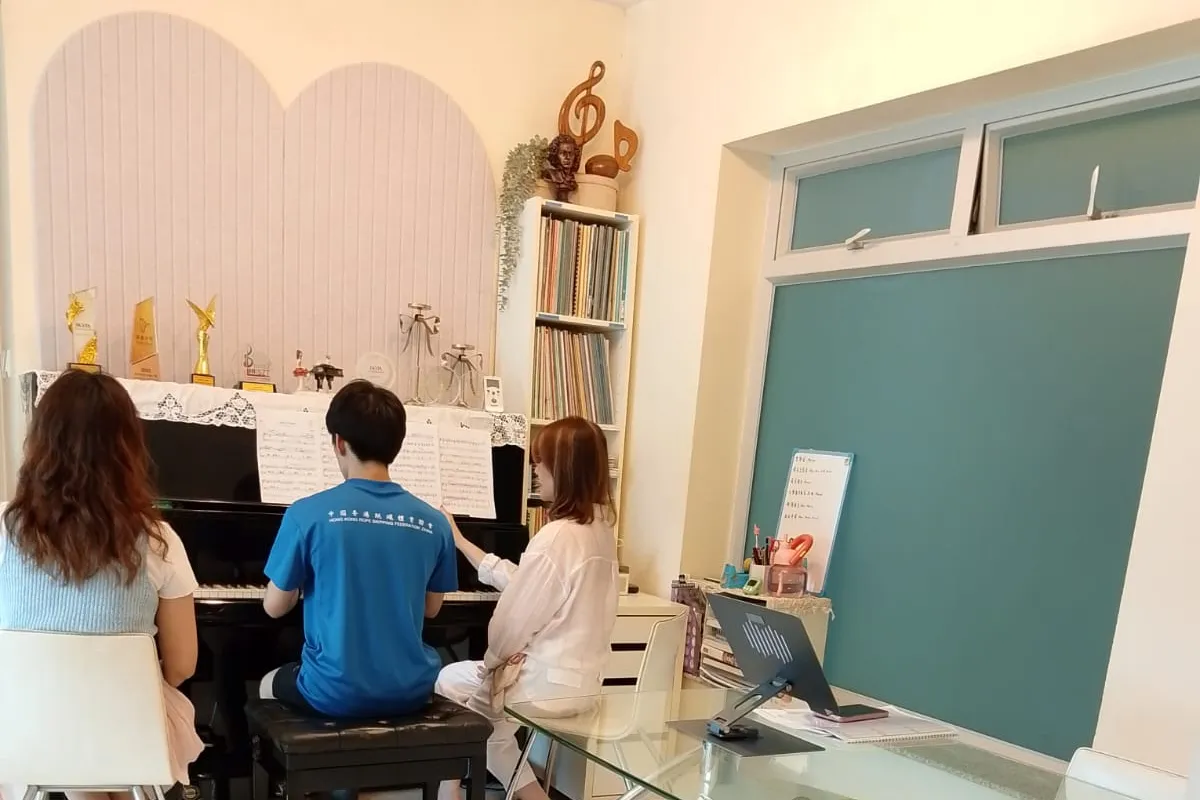
"Teacher, which of these pieces is the easiest? Let's just enter with that one." Every exam season I hear this question — but the word "easy" hides a severely oversimplified premise.
For me, choosing an exam piece has never been about picking a pleasant tune. It is an entire programme of synchronized teaching and learning.
Repertoire Selection Starts From the Student, Not the Piece
Many teachers start by flipping through the ABRSM syllabus and seeing which piece they know best. I believe the starting point of selection is the student, not the music.
I first ask myself: What is this student's personality type — outgoing, introspective, deeply emotional, analytical? Where does their musical ability currently sit — solid technique but weak expression, or rich feeling but underdeveloped articulation? And how much time can they actually practise each day — thirty minutes? An hour? Two?
Line up those three variables, and the right pieces float to the surface on their own — rather than being forced onto the student. Because any piece can be played to "pass standard", but only the right piece gets played movingly.
Within the Exam Lists, Choose Maximum Diversity of Colour
ABRSM Grade 8 repertoire is divided into List A, List B and List C — different eras, different styles. My rule for myself: the three pieces must represent three completely different colours.
For example: from List A, a Baroque or Classical work of rhythmic precision, rigorous structure and clean lines; from List B, a Romantic work of strong songfulness and vivid lyrical lines; from List C, a modern work of broad colour shifts, complex technique and contemporary harmonic language.
Why arrange it this way? Because the exam was never the goal — the diversity of repertoire is the training. When a student must command three different musical languages within the same year, their expressive range, technical adaptability and interpretive depth are all stretched open. That growth runs far deeper than merely "passing."
Set an Executable "Practice-Time Ledger"
After the repertoire is set, I do something many teachers skip — I build the student a practice-time ledger for the whole year, dividing the preparation into four stages:
• Stage one — note-reading, positions, slow practice, phrasing
• Stage two — technical breakdown, reinforced work on difficult passages
• Stage three — whole-piece integration, colour shaping, emotional investment
• Stage four — mock exams, rhythmic stability, mental preparation
Then, against how much the student can practise per day, I work backwards to the weeks each stage needs. The benefits: the student knows what today's practice is for and never repeats blindly; the parents know where this month should be and stop asking anxiously; and the teacher can see immediately if progress drifts, and adjust in time.
Every Piece Gets a Complete Musical Analysis
To me, practising without musical analysis is like walking a mountain path with your eyes shut. For every exam piece, I work through this with the student:
• Form and structure — how many sections, and the role of each
• Harmonic language — how this composer drives emotion through harmony
• Rhythmic character — special patterns, and where things tend to fall apart
• Colour shifts — which bar is the pivotal "colour change", and what touch it needs
• Technical difficulties — which passages need isolating, and what method to use
Only after the analysis can a teacher give clear instructions — practise by phrase, by section, by technique. It is a principle I have held for years: practice without clear instructions is wasted time.
Shortening Practice Time Is Itself an Ability
Many parents assume that more hours at the piano is always better. Not so. Systematic practice achieves more solid results in less time.
When the teacher has broken the piece down clearly — phrases, sections, correct methods — every minute of the student's practice is effective. Conversely, with no analysis, no breakdown and no method, even two hours a day may only be deepening incorrect muscle memory.
That is why I so often tell parents: "The length of practice says nothing about its effectiveness. Whether the student practises correctly is what matters."
To Parents and Students Preparing for Exams
If you find that your child's (or your own) current exam preparation looks like this: repertoire chosen too ambitiously, with nothing flowing; long hours of practice with no felt progress; no clear "what to practise next" from the teacher; anxiety rising as the exam approaches —
Then perhaps the problem isn't effort. It's that the whole teaching-and-learning system behind the exam hasn't been built yet.
A one-on-one professional music consultation can reassess whether the current repertoire truly fits the student, break down each piece's key passages and practice methods, build an executable staged schedule, and answer the questions parents and students carry into the exam.
Behind this selection-and-planning process stand the four anchors I have held for years: genuinely teach each student as an individual — start from their personality and ability, not a universal template; build a systematic learning model — from analysis to staged practice, every step clear; cultivate self-learning and thinking — a student who understands why they practise this way invests willingly; face exams and performance rationally — the exam only verifies, and the diversity of repertoire is the real growth.
Frequently Asked Questions
Ms. Kannaz Kwok
Thirty years of piano teaching experience. Holder of internationally recognised qualifications from the Royal Academy of Music and Trinity Laban Conservatoire.